
Above the Reception Room at A.Caraceni
High above the reception room at A.Caraceni hangs Moroni’s celebrated painting, The Tailor. In the 16th century—the era when this work was created—only religious figures or influential patrons were deemed worthy of occupying the center of a canvas. Yet Moroni chose to feature a young tailor of modest social standing. Impeccably dressed and strikingly handsome, he holds a pair of scissors in his right hand and fabric in his left, his determined, slightly proud gaze meeting that of the viewer beyond the frame.
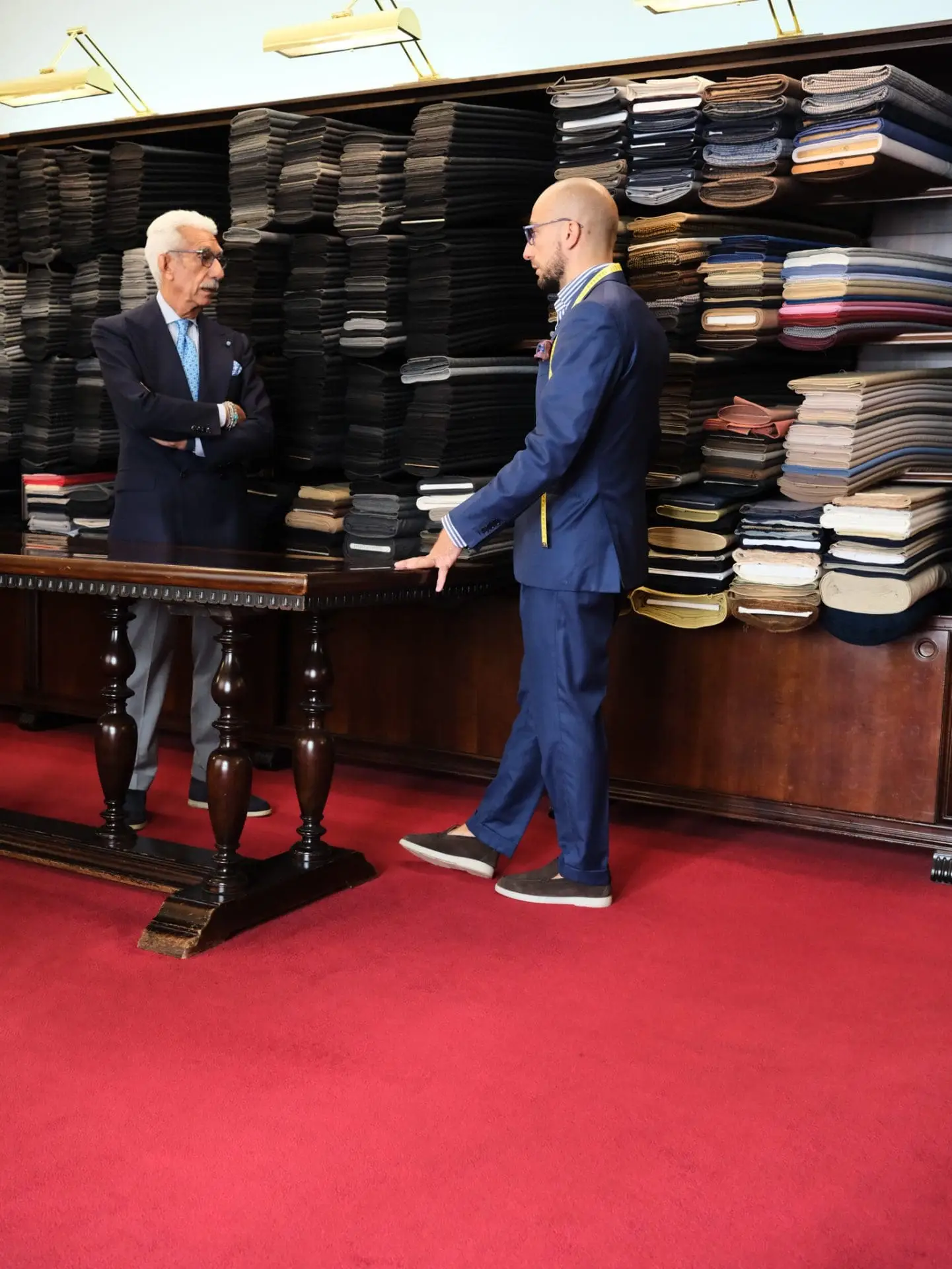
When I asked Max (Massimiliano Andreachhio Caraceni, the fourth generation of this storied tailoring house) to pose for a photograph, he stood beneath Moroni’s The Tailor, his confident gaze echoing that of the craftsman in the painting above—two tailors, centuries apart, yet linked by their proud in the craft.
As one of Italy’s most emblematic tailoring houses, A.Caraceni has long served political and business elites. Its meticulous craftsmanship and measured approach have made it the first choice for fashion leaders and style icons across generations—from Karl Lagerfeld and the Loro Piana family to Gianni Agnelli and Calvin Klein. Max, the fourth-generation scion, began his apprenticeship at A.Caraceni at the age of 18; by the time we met, he had already devoted twenty years of his life to the craft.
Leading me through a reception room laid with a red carpet, Max guided me into the workshop housed in the same building. There, a host of youthful faces moved about: some were busy sewing interlinings for lapels, others meticulously stitching buttonholes. These new-generation tailors from around the globe barely spared a glance for me, the curious interloper. While many artisanal brands lament the scarcity of skilled apprentices and veteran craftsmen—resulting in dwindling operations and even shuttered doors—A.Caraceni enjoys a steady flow of talent.
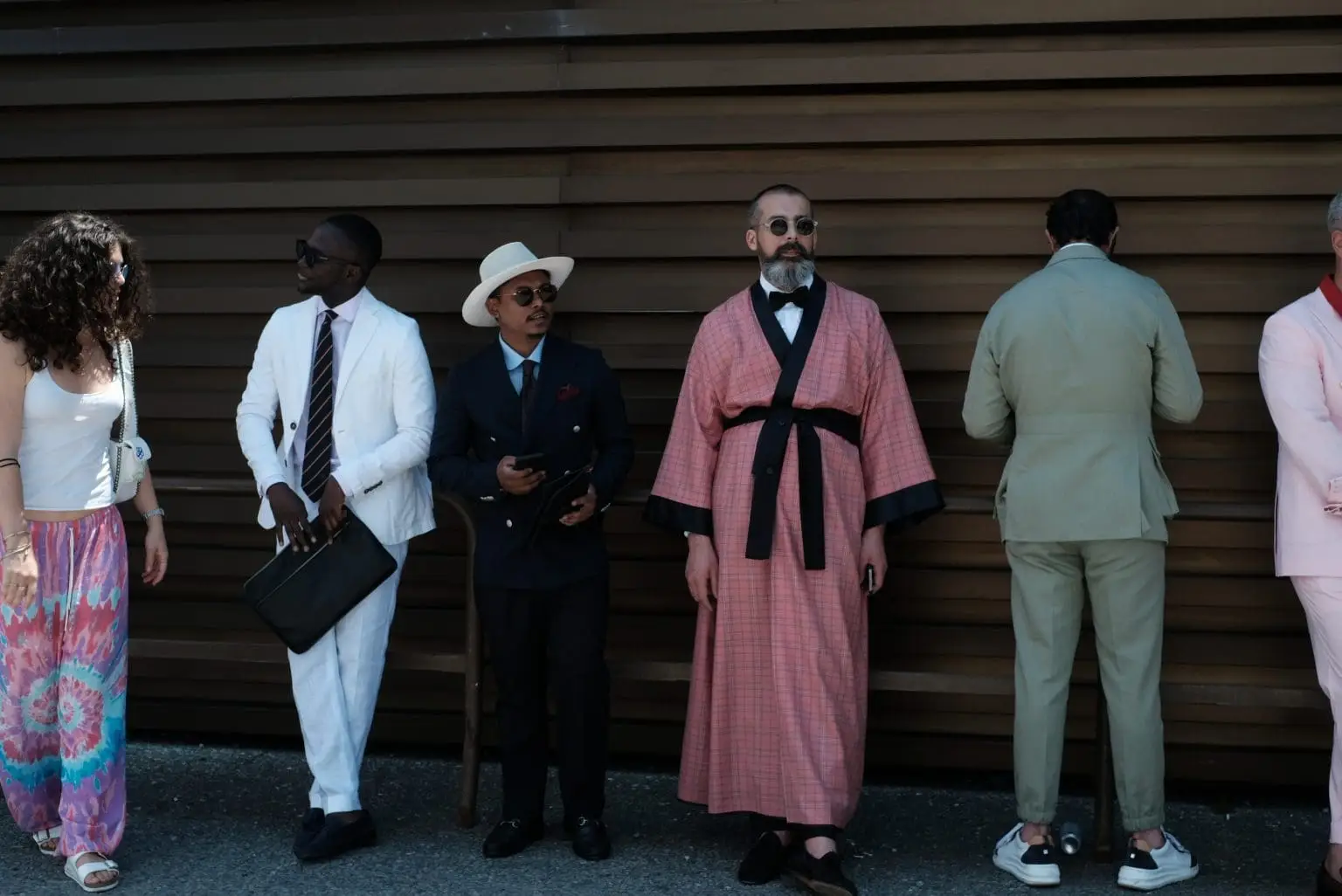
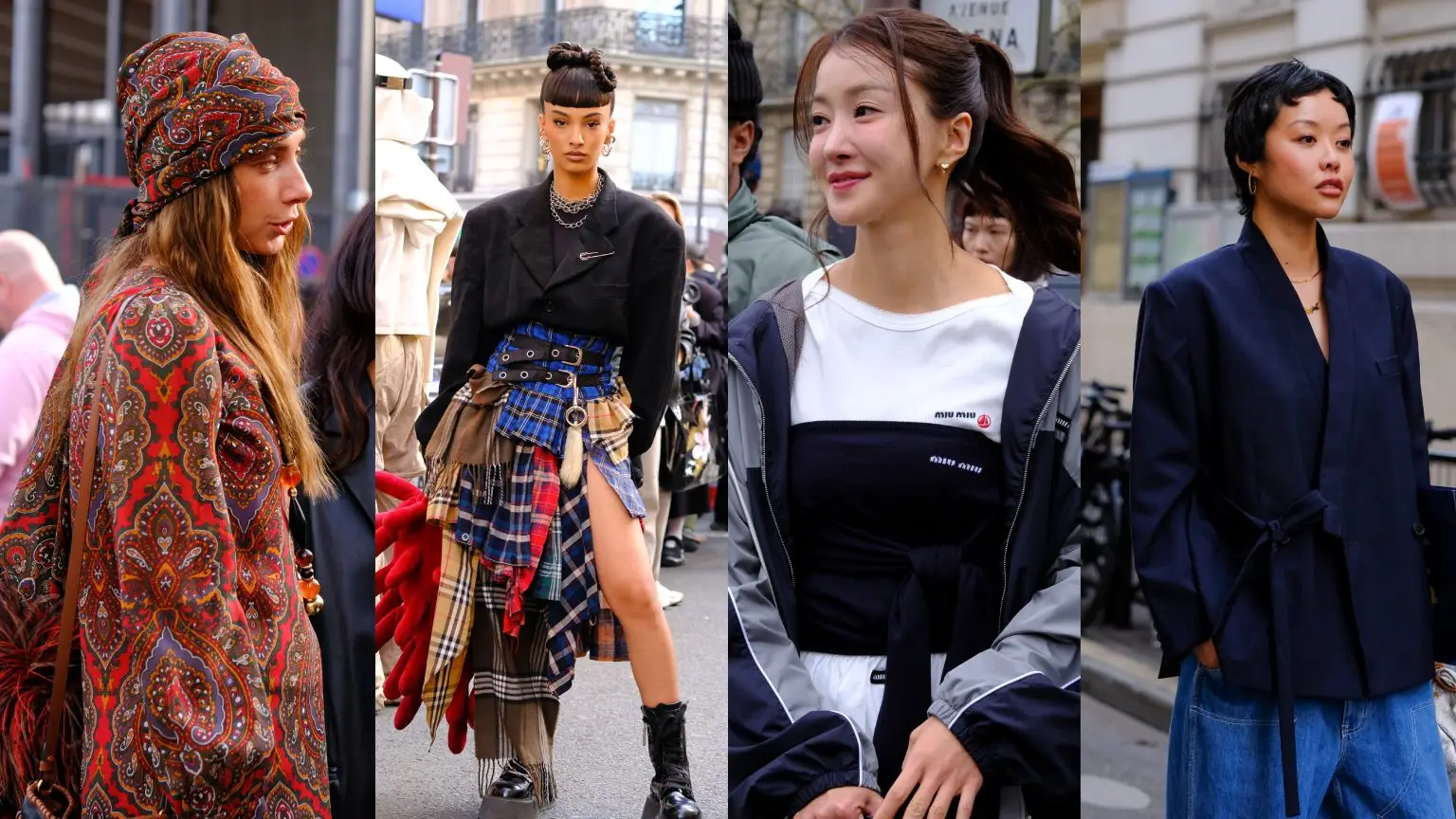
Diana Vreeland once mused in her memoir, “Before the war, a dressing gown was tried on three times… After the war, people no longer tried on dressing gowns.” In many cultures, bespoke clothing was once the norm; today, that experience seems remote to most. Every era convinces itself that it has witnessed the decline of fashion. A person from a century ago might be shocked by today’s casual, rough-edged street style. But is this truly the fall of fashion? Rather than a decline, it signals a broader democratization of style—one where tradition and modernity coexist. Some opt for a bespoke suit paired with New Balance 990 sneakers; others wear a Comme des Garçons jacket with an unconventional cut. In an age when everyone can be a designer or stylist, what future remains for a traditional establishment like A.Caraceni? Perhaps my conversation with Max will shed some light.
A Conversation with Max Caraceni
A (Agnes): How many tailors are currently working in the workshop?