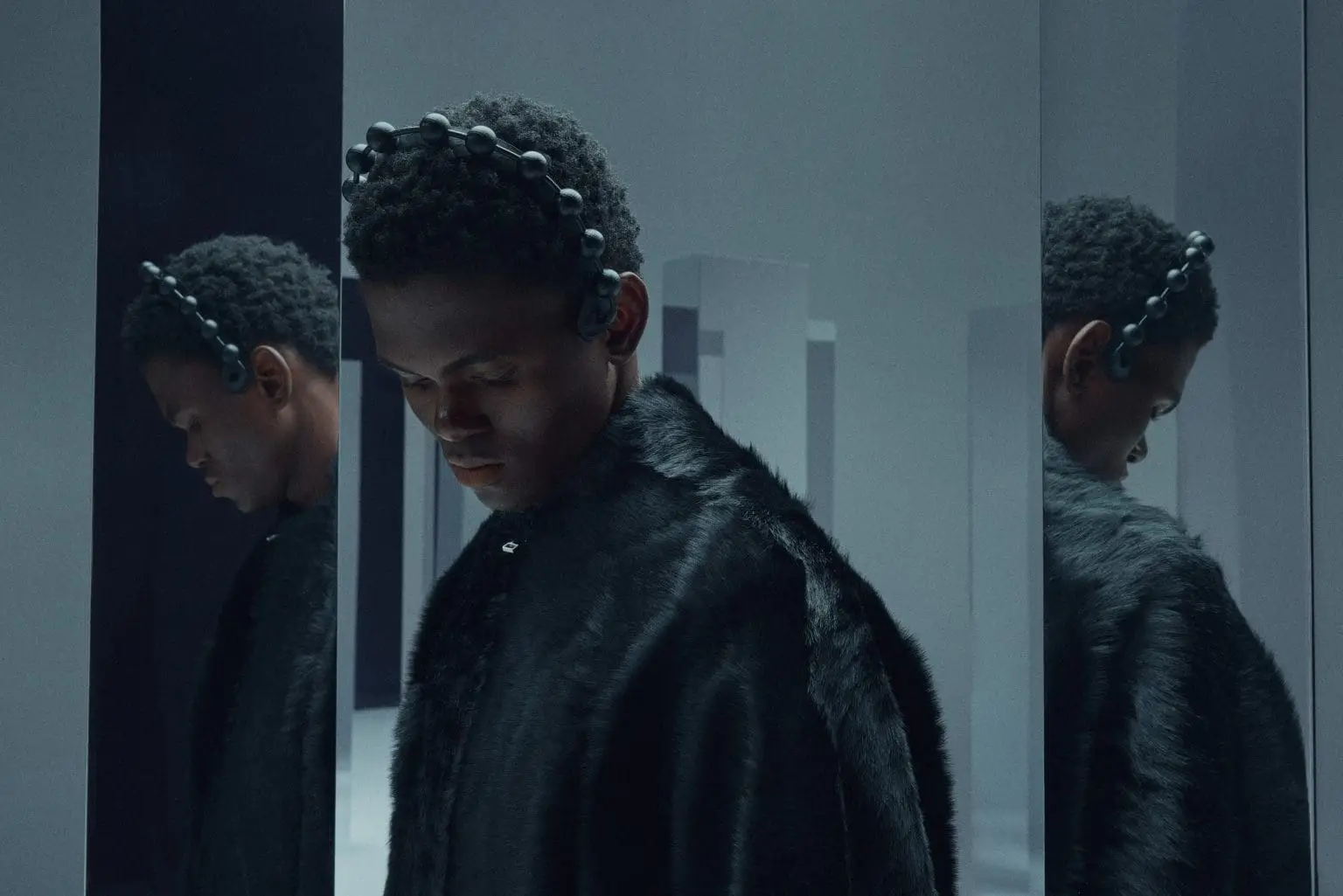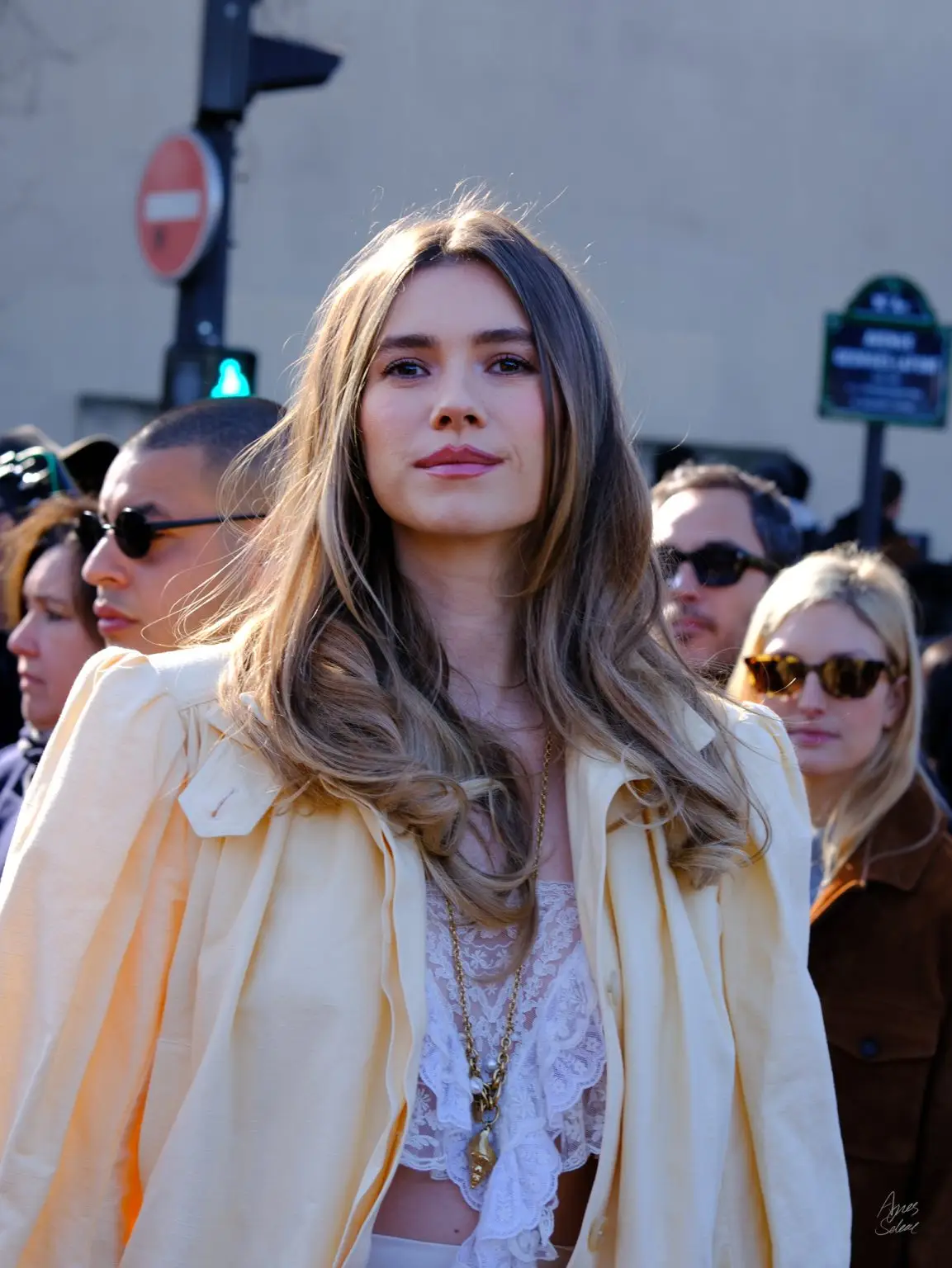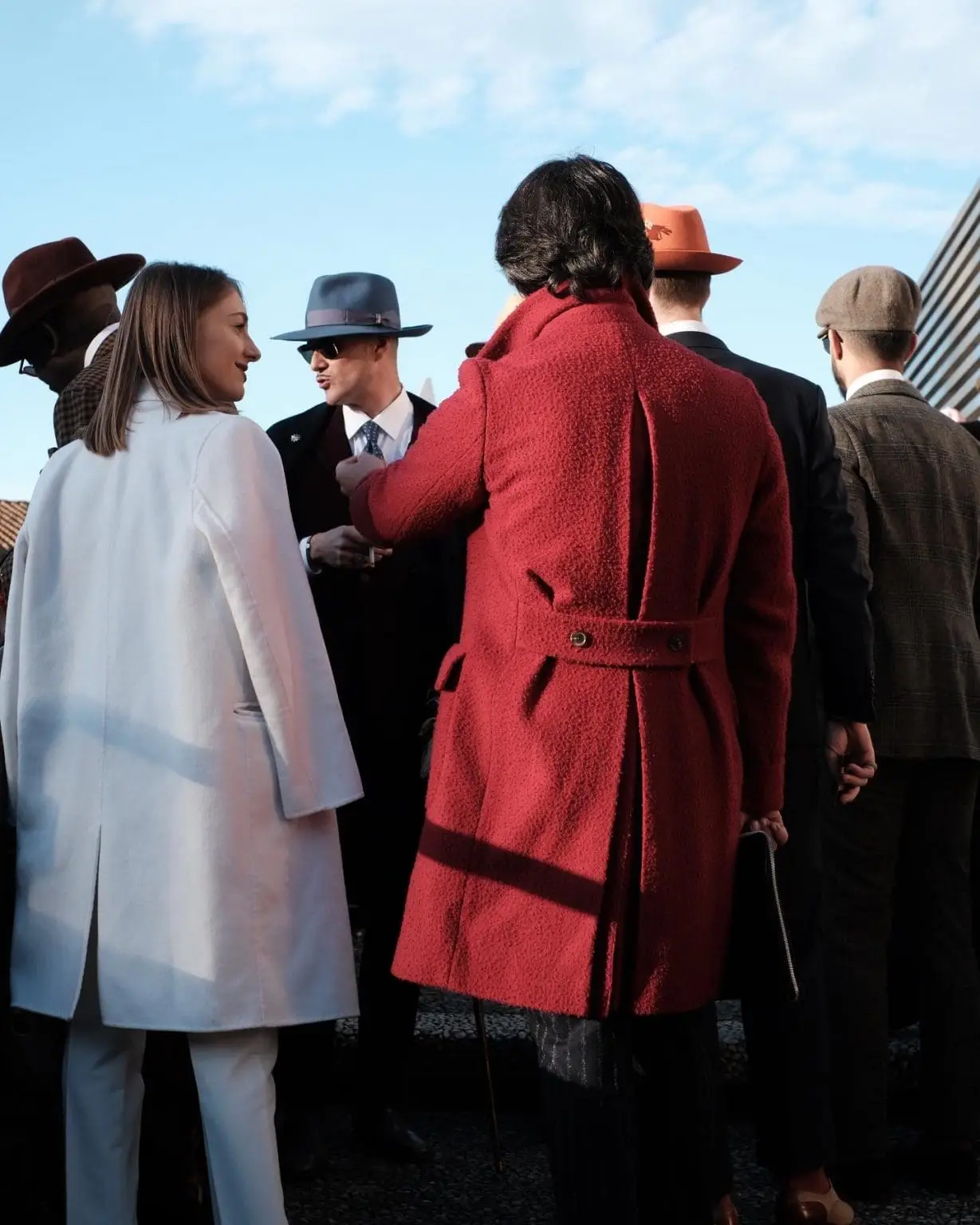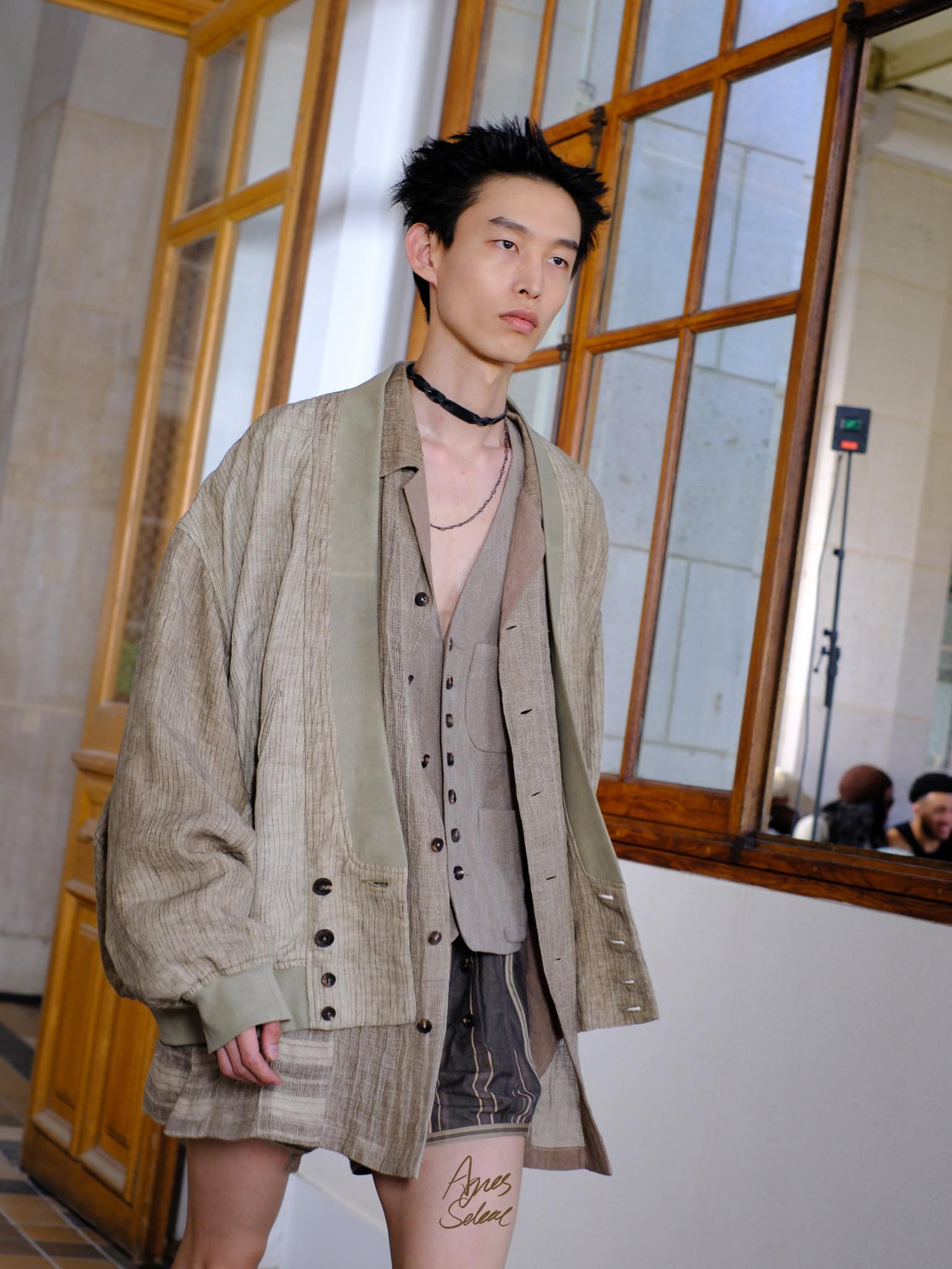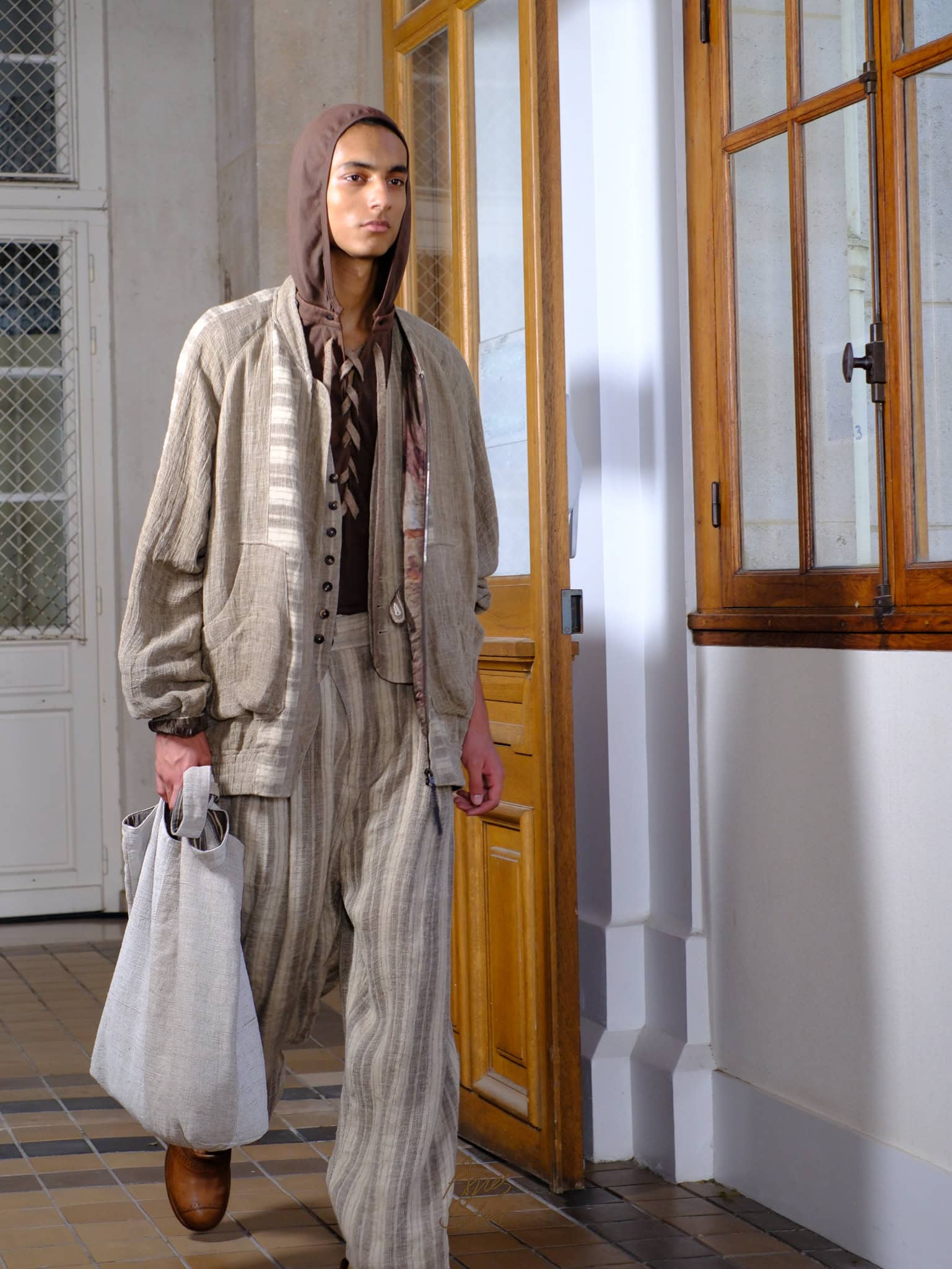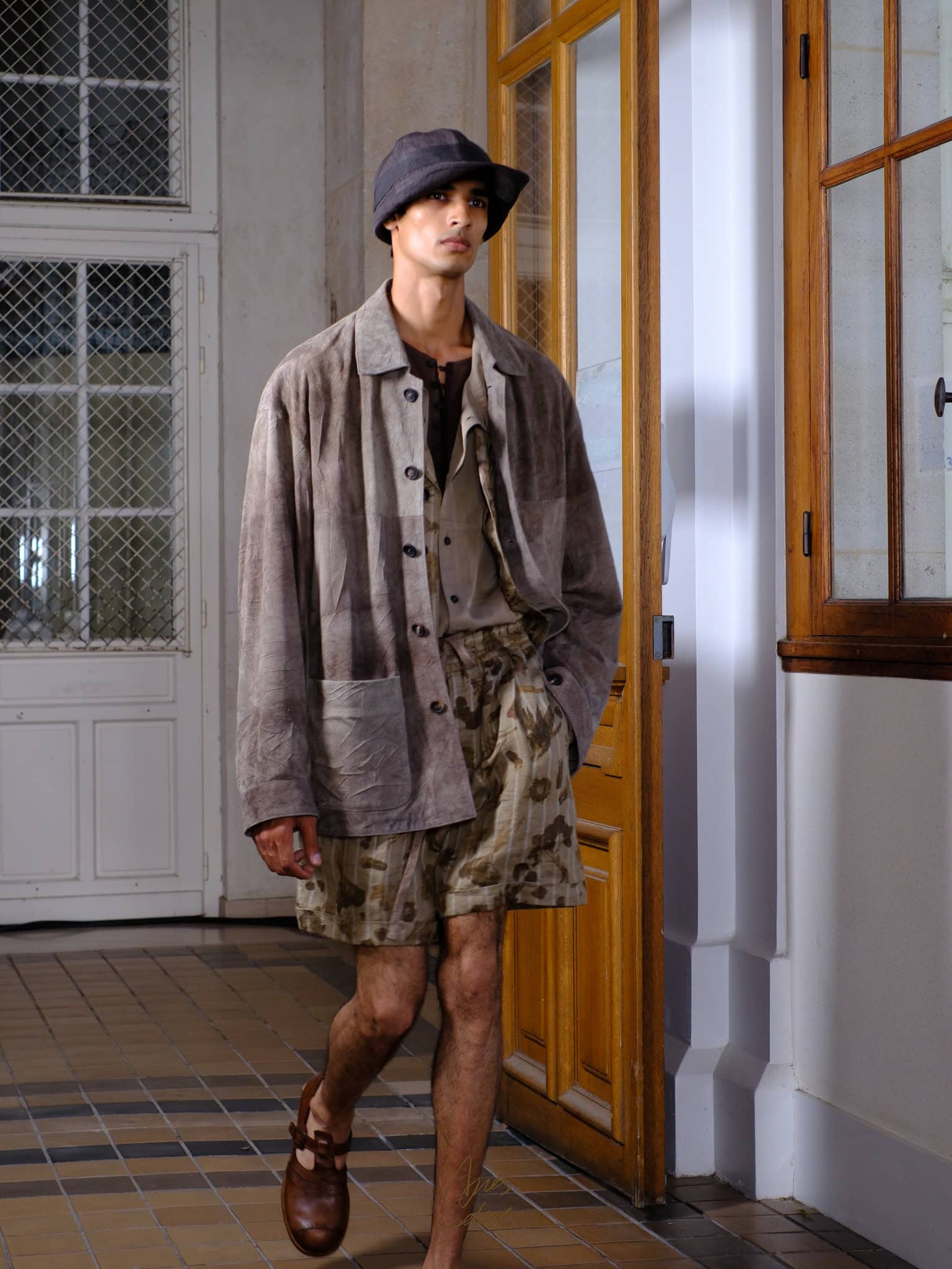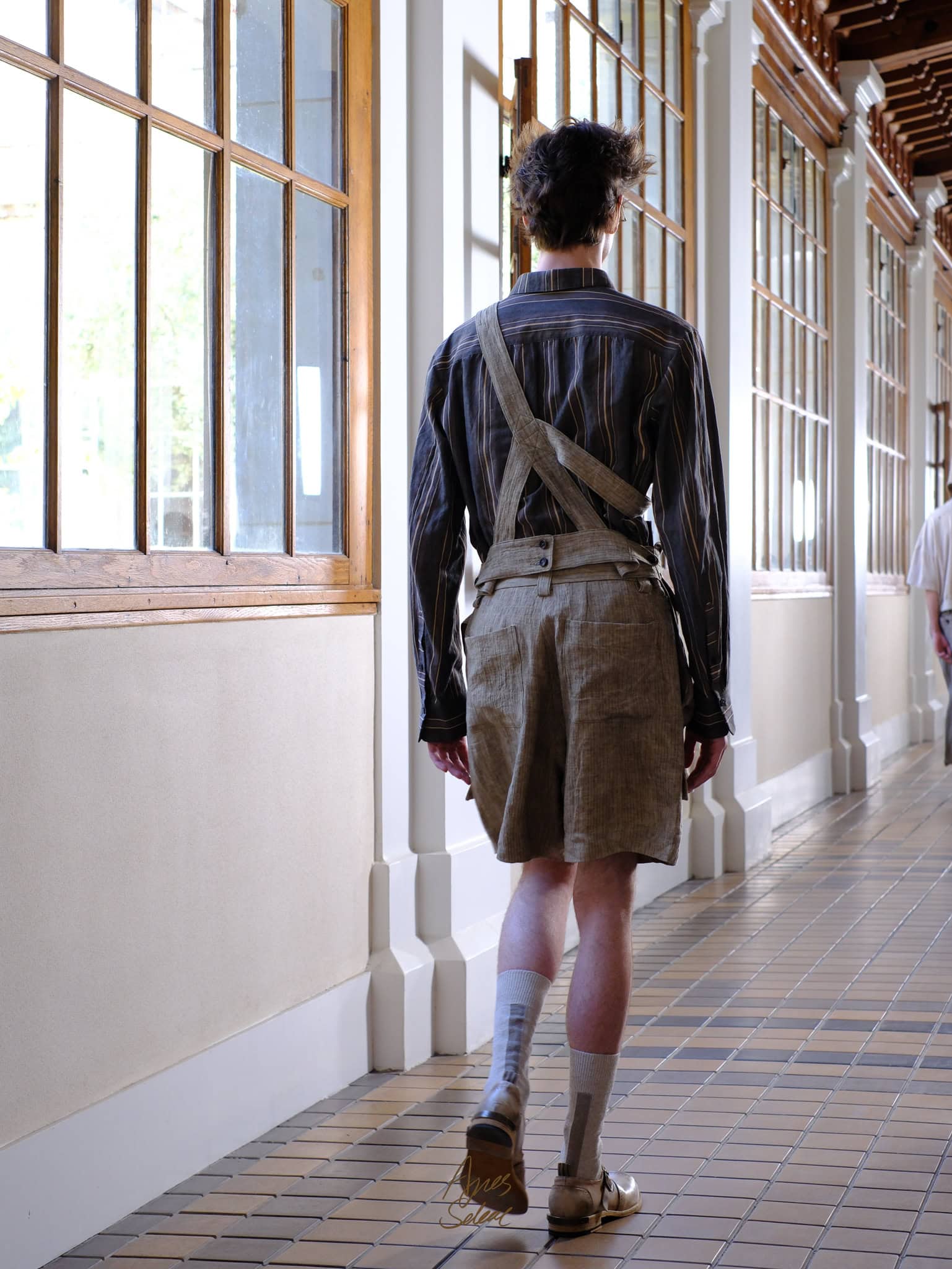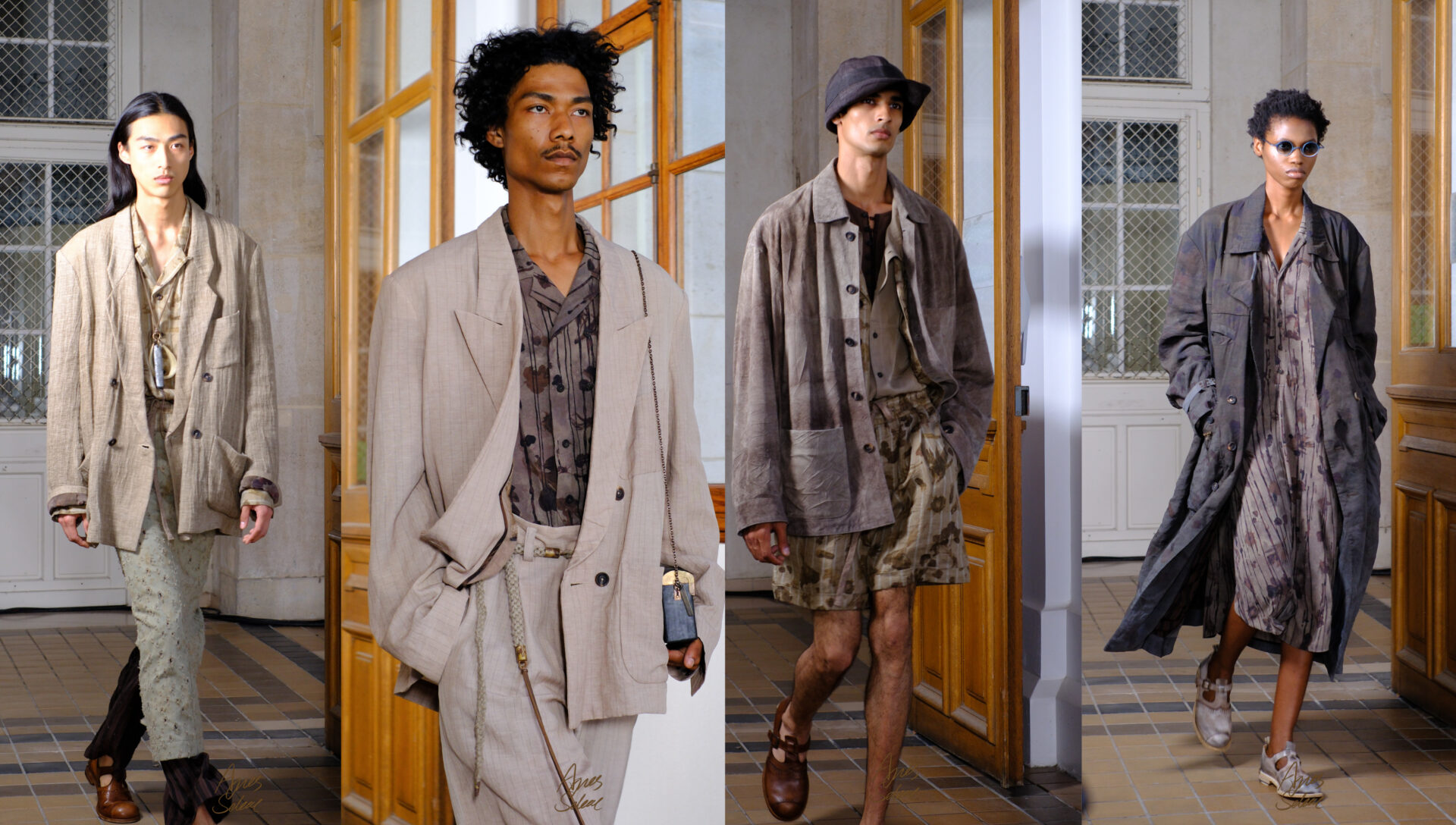
Ziggy Chen‘s collections have always carried a carefully constructed sense of wear, as if only garments that have already lived through years of use are worthy of his attention. In AMBIEPOSE, he chooses to let the print be baptized by rain, taking this post-use tension to a new density.
AMBIEPOSE is the portmanteau he coined for the season—ambience combined with purpose. Ambience, in his reading, is a refined perception of the everyday: an intuitive, emotional recognition of the world around us, shaped by atmosphere and lived experience. Purpose is the subtle threshold between utility and intention, closely tied to the ongoing, delicate relationship between the maker and the wearer.
Portmanteau naming has itself become a chronological habit in Ziggy Chen’s recent seasons. FW23’s Viglumsy (vigorous + clumsy), FW25’s Voleisure (volition + leisure), SS26’s Pritrike (primal + strike), and this season’s Ambiepose—he repeatedly compounds two seemingly unrelated, even mutually contradictory concepts to mark the central tension of each season. This is not a rhetorical game but a cognitive method: he builds each season’s material inquiry on a set of tensions.
The Designer
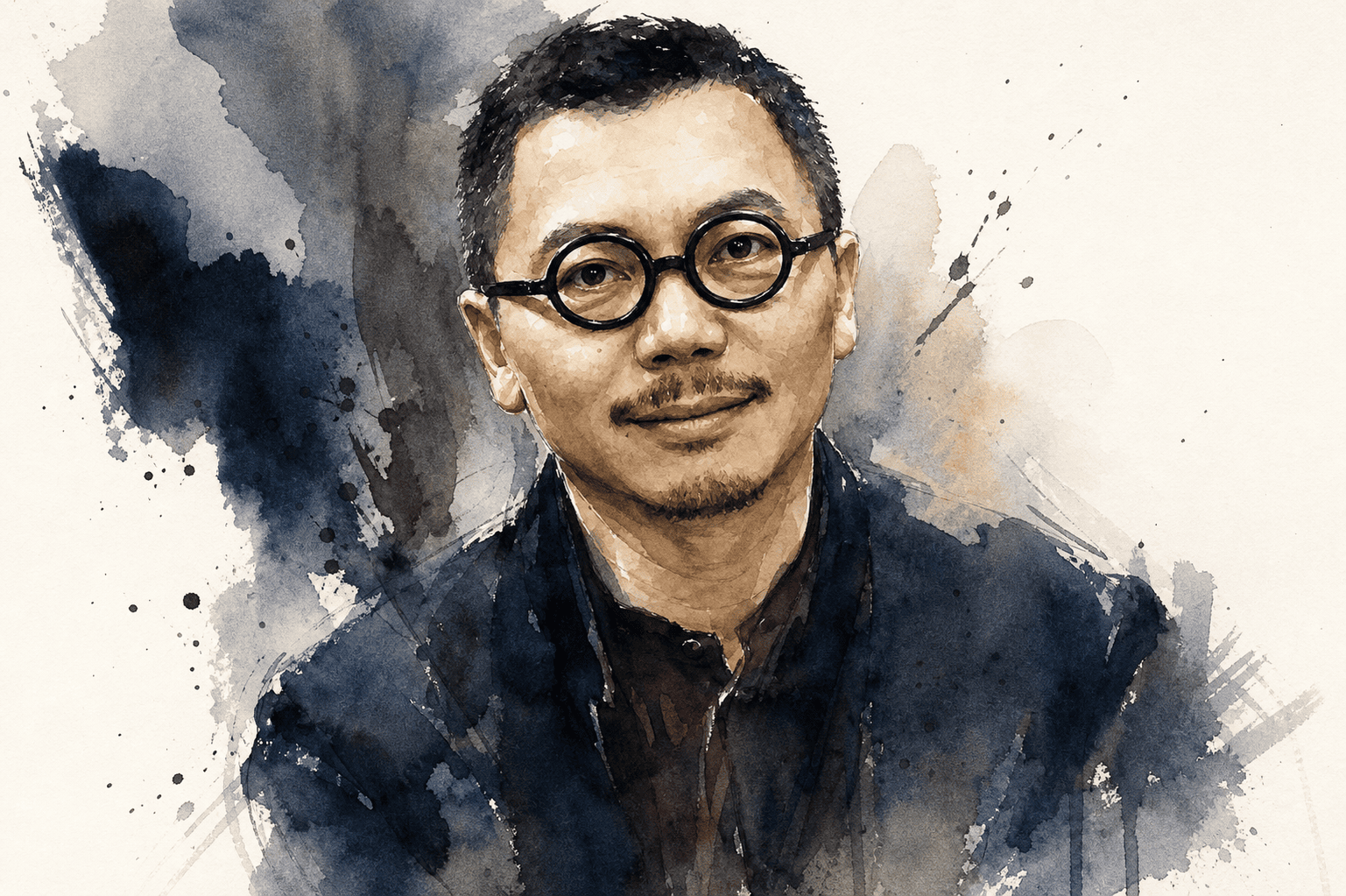
Ziggy Chen was born in Wuhan in 1969. In 1990 he entered China Textile University (now Donghua University), studying fashion design in the Arts and Crafts department; after graduating in 1994 he remained as a lecturer in textile design. He later left academia for the fashion industry, and after roughly two decades of industry experience, launched his eponymous label in Paris with the AW12 collection in 2012.
Several directions run consistently through his design vocabulary: natural fibers (wool, linen, cotton, silk) as the primary materials; the juxtaposition of 17th- and 18th-century European garments with Chinese garments from the same eras; visual references from the Song and Qing dynasties through the Republic of China period; and a preference for traces of use—he has said that many of his patterns and details are inspired by “tools, pottery, textiles, and furniture that have been used, deformed, and worn down.” His fabrics are largely developed in-house, often reworked from 17th- and 18th-century books and antique textiles in his personal collection.
Ziggy Chen has long held a stable presence in the world’s most demanding avant-garde retail—Dover Street Market, L’Éclaireur, Antonioli, Isetan Tokyo, Lane Crawford Hong Kong, Maxfield Los Angeles, and Atelier New York, among others, have carried his collections for years.
The Lineage of "Dirty Rain"
If there is one traceable visual thread across Ziggy Chen’s seasons, it is not a single garment category but a family of prints—a “surface of use” he has developed through varied methods. These surfaces do not pursue clarity or ornament; they simulate a trace that sits between human and natural intervention. This season, the thread’s lineage is clearly readable.