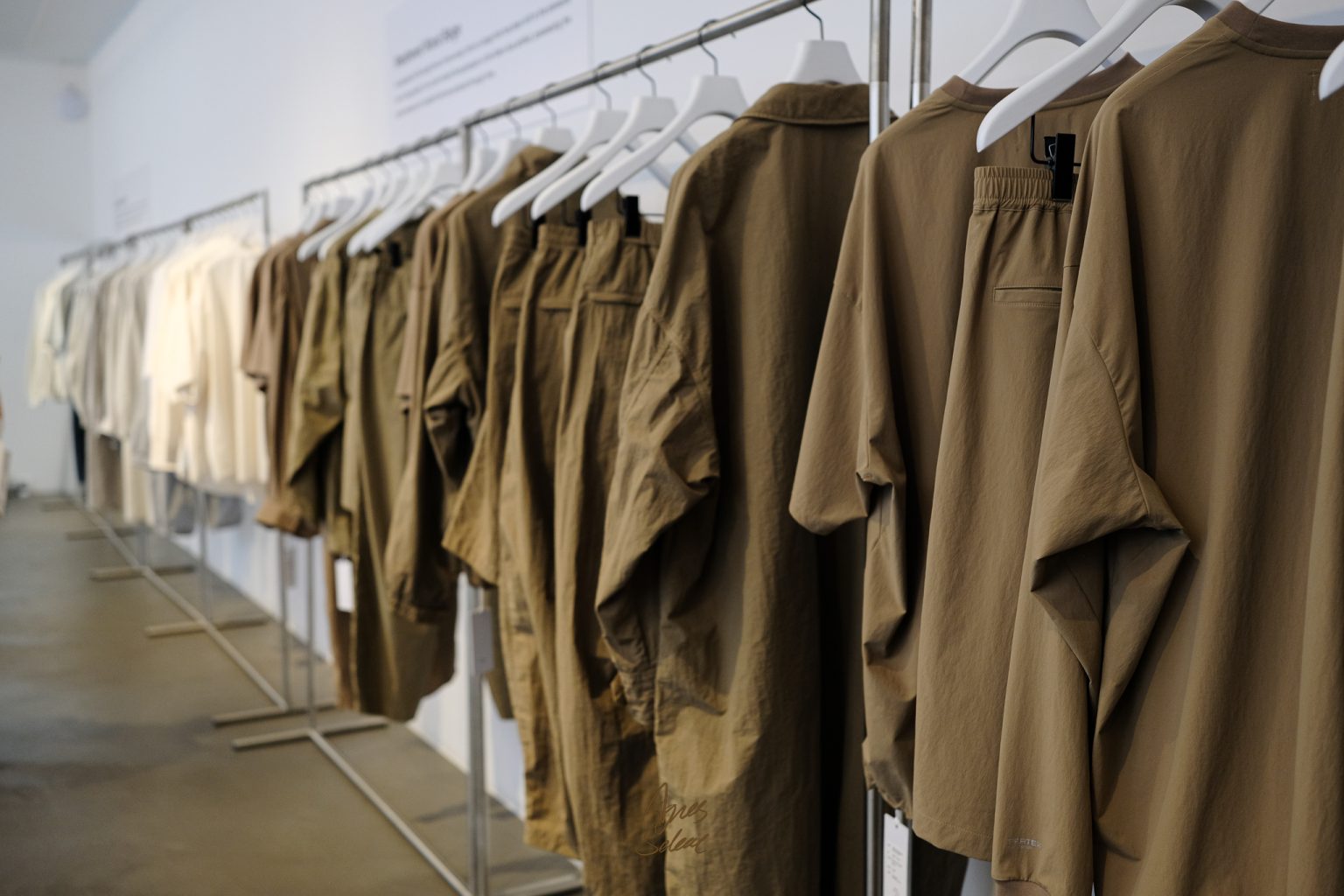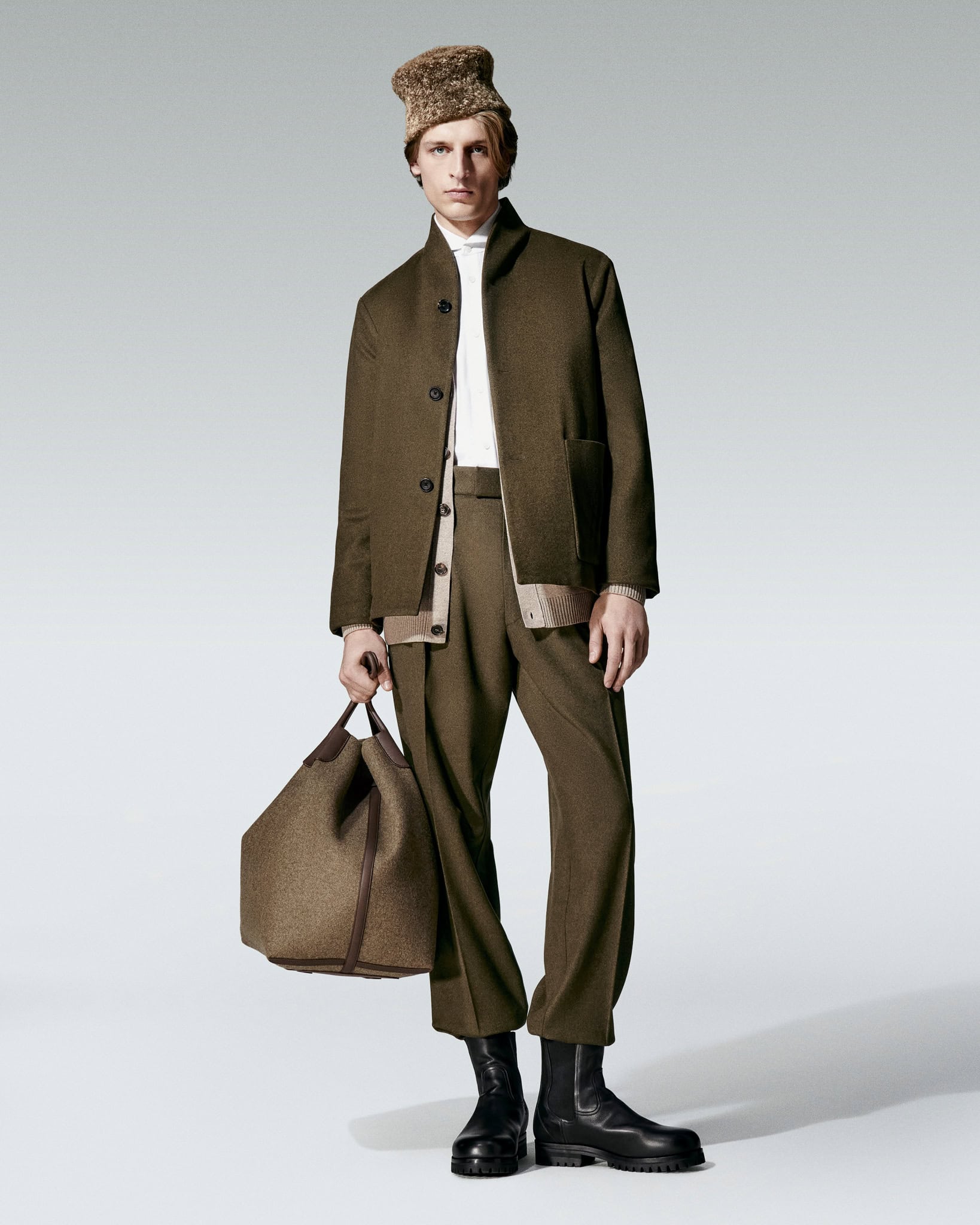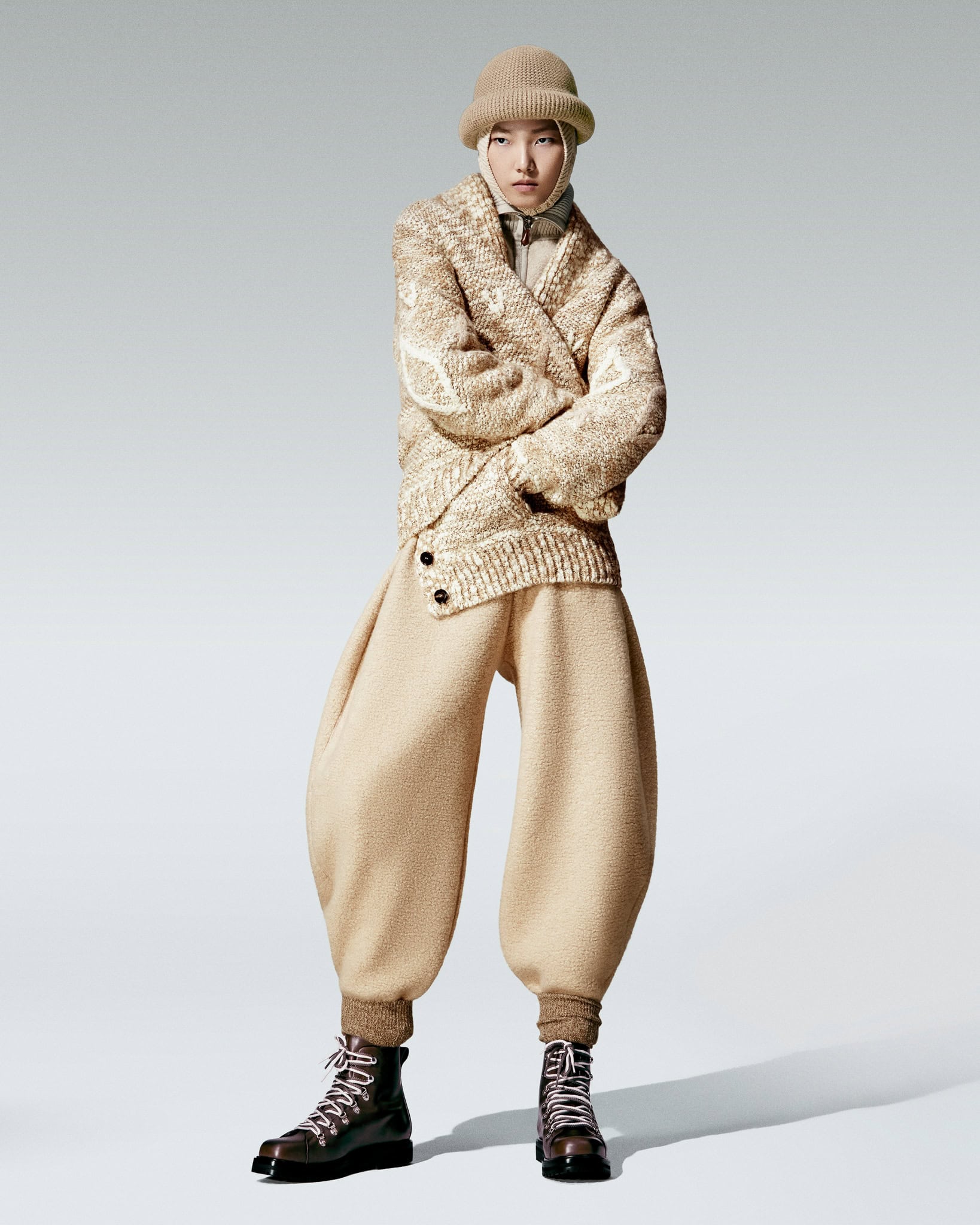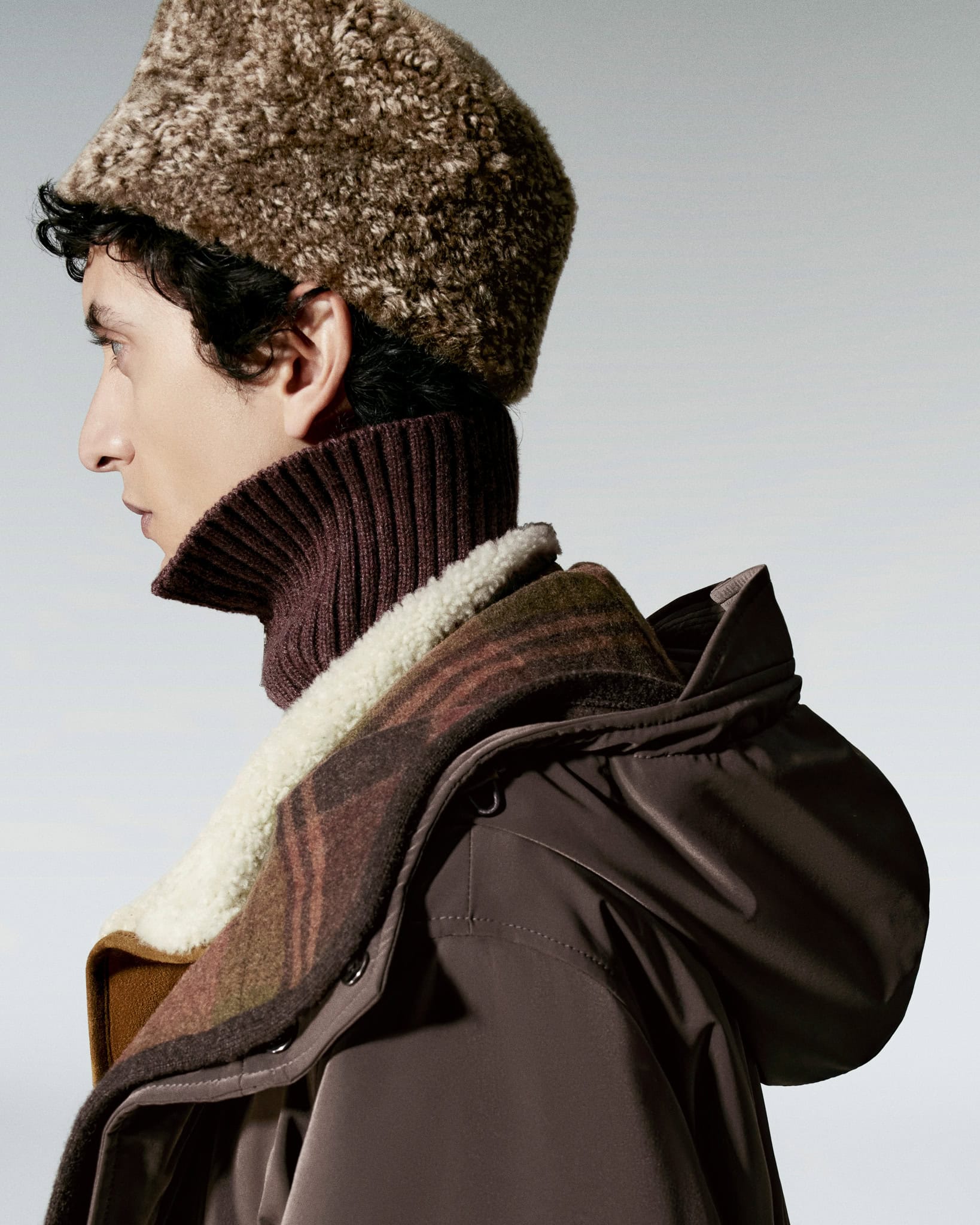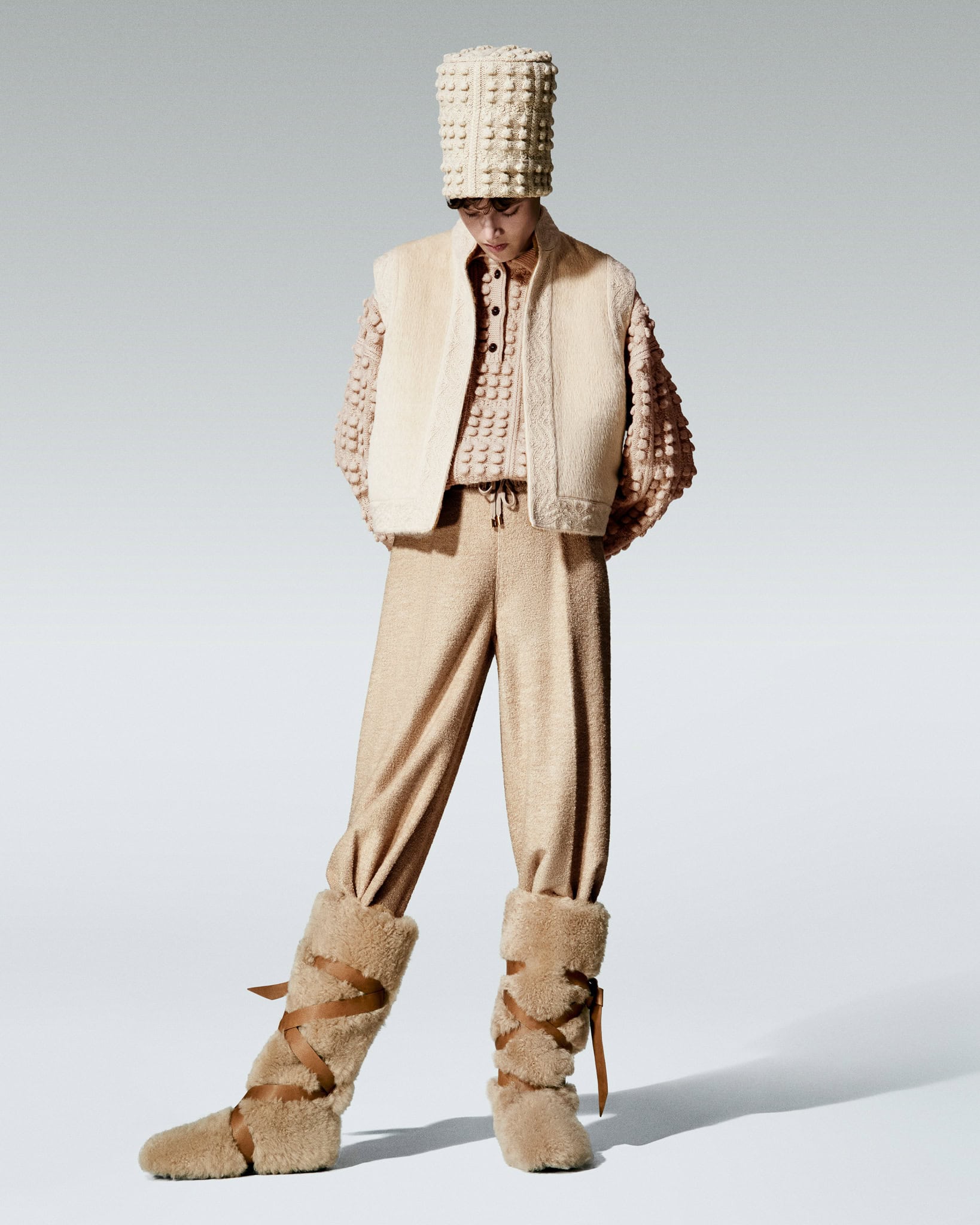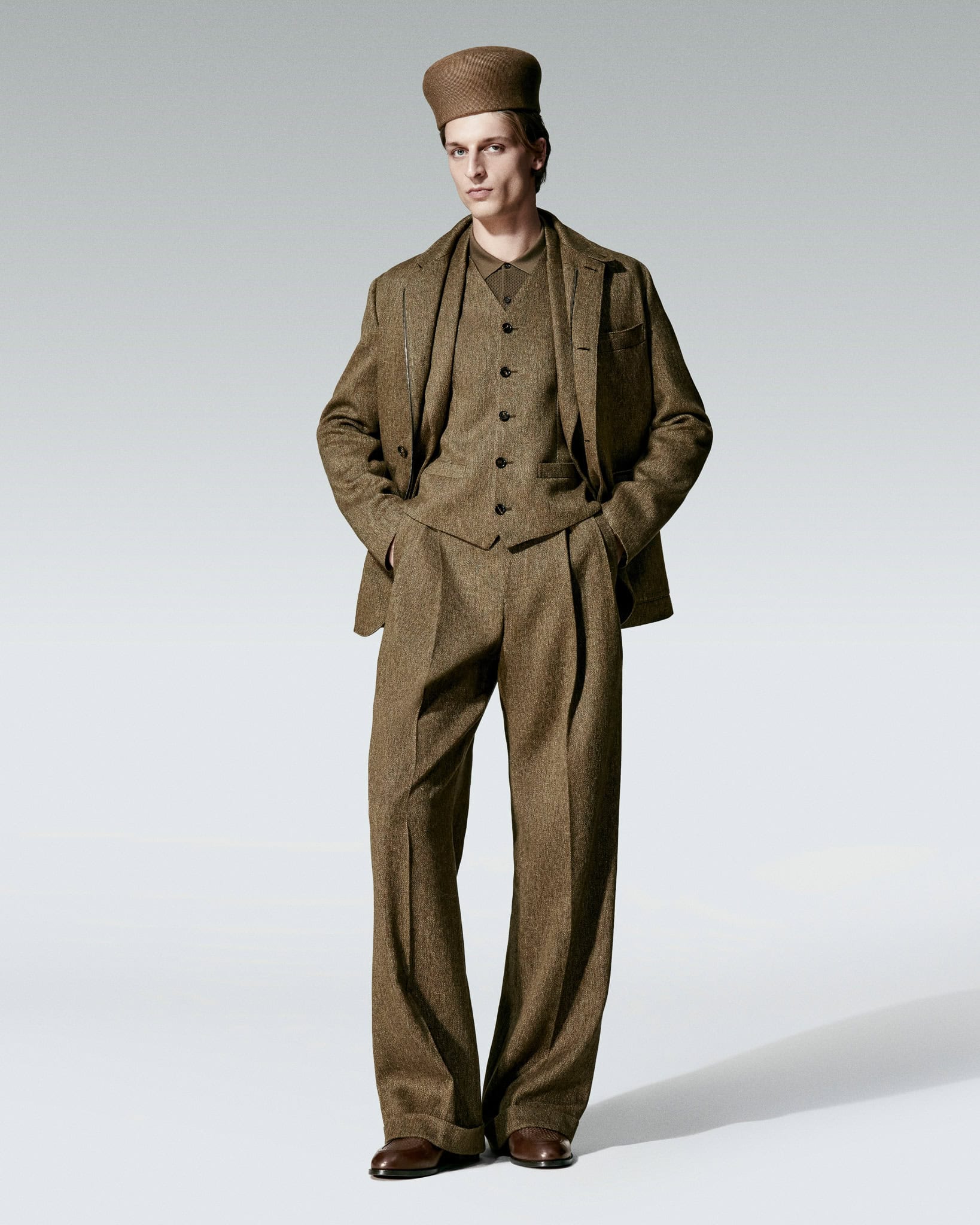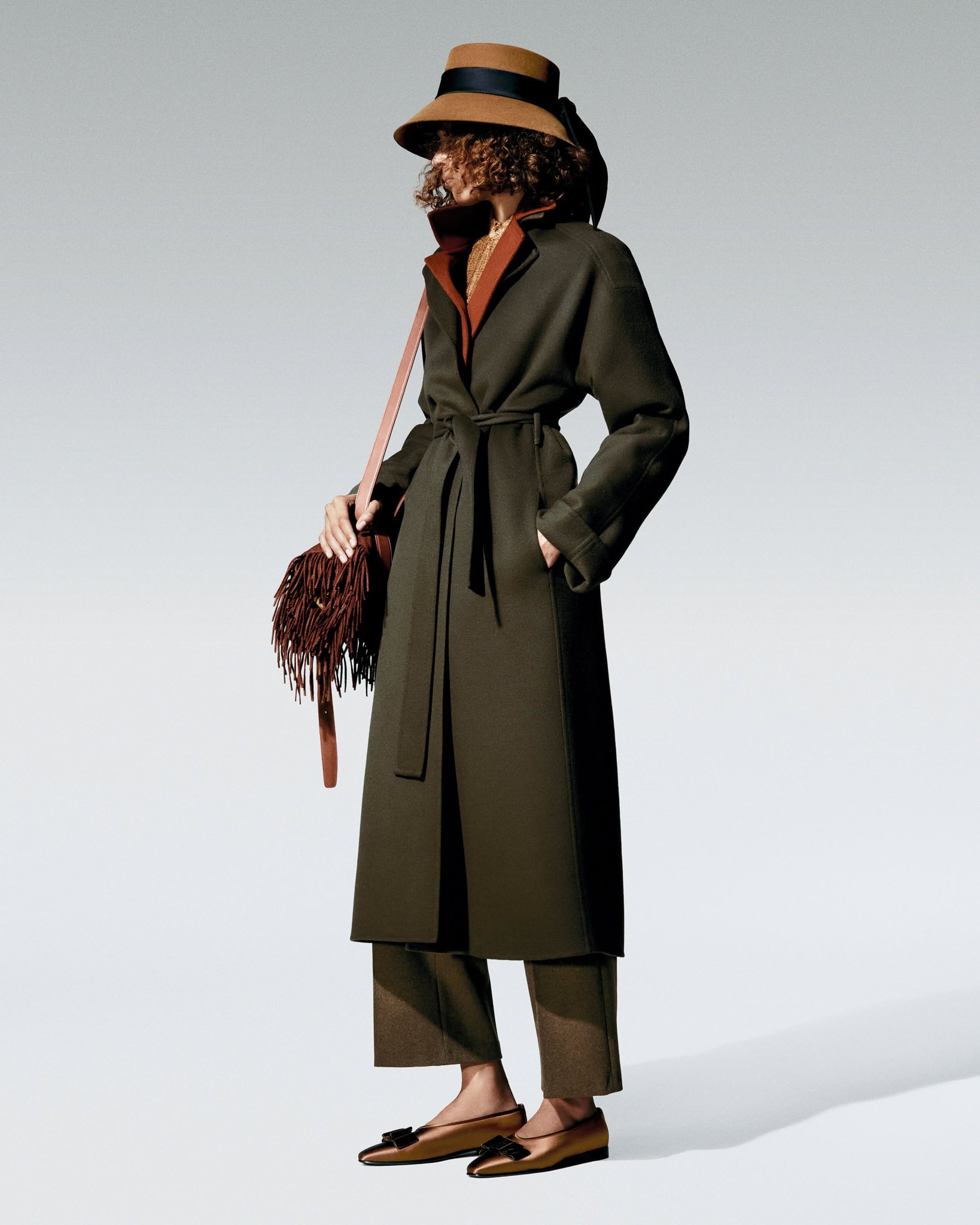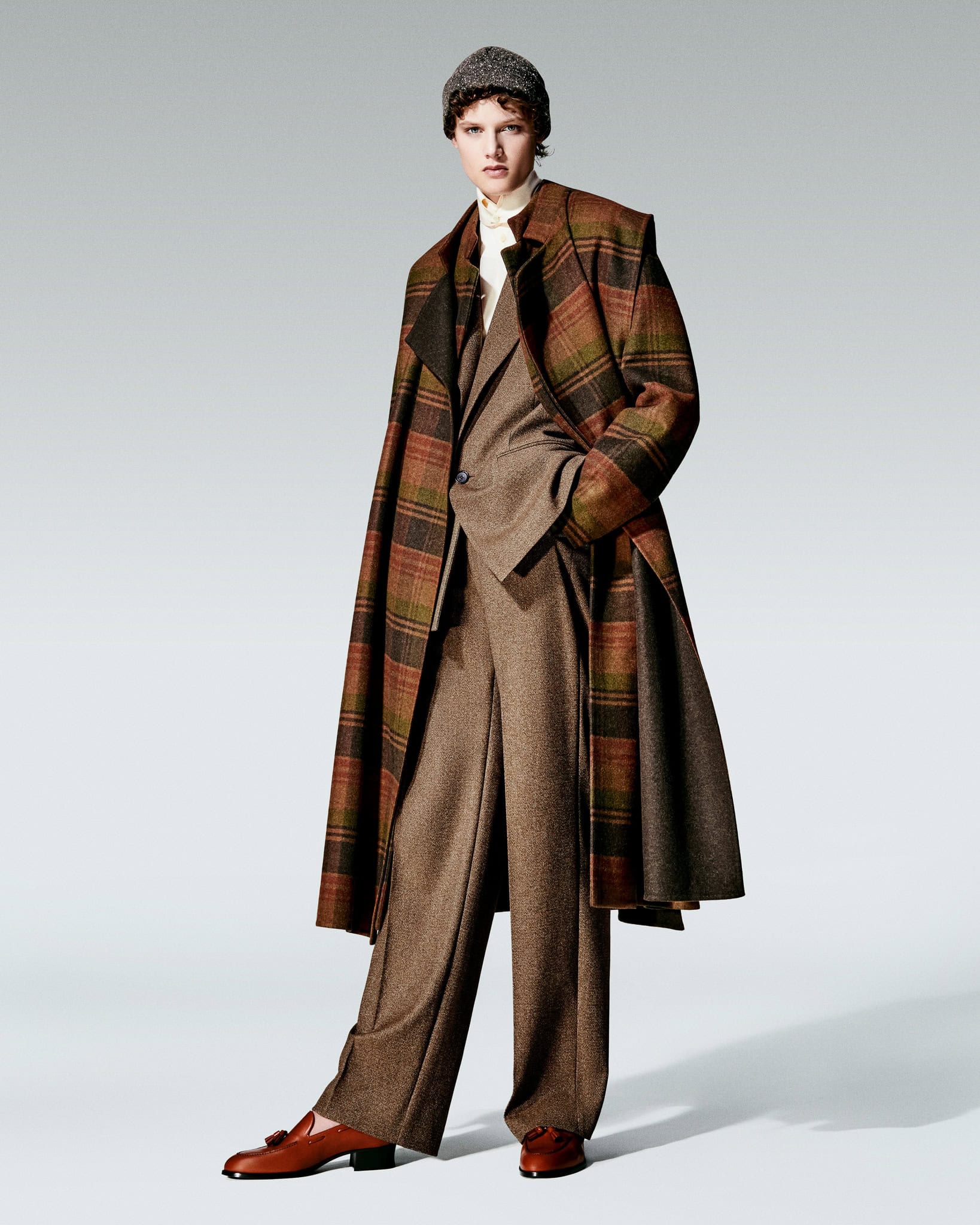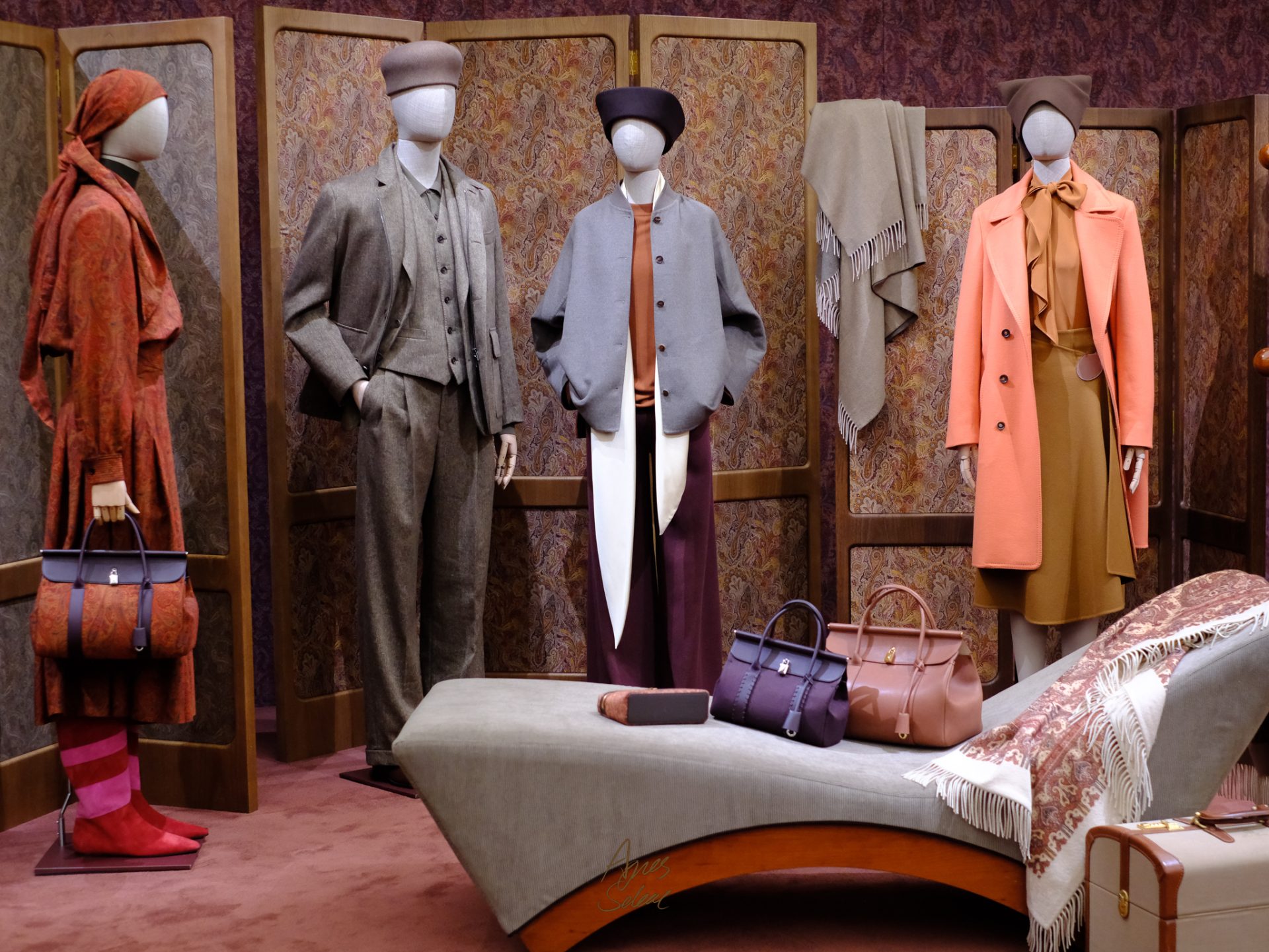
This season, Loro Piana takes the figures once glimpsed beside Impressionist paintings—poised to board a yacht—and seats them on a train that actually moves. The palette travels from ochre and terracotta through beige, grey, and deep brown before sinking into forest green, tundra, midnight blue and black‑and‑gold, creating a visual timetable that runs from daylight into the depths of night. The destination matters less than the hours spent in the carriage, and the kind of wardrobe required to anchor those moments.
Travel as rhythm, not postcard
Here, Loro Piana is less interested in holiday snapshots and more in the lived rhythm of moving from time zone to time zone. It’s not about a photo on deck, but a long night in a sleeper cabin. Menswear is relaxed without collapsing: shoulders are soft, sleeves drop slightly, and between long coats and shorter blousons you get vests, roll‑neck knits and light shirts layered in, so clothes adjust to temperature rather than to occasion. Womenswear lines up long coats, cape‑like outerwear, double‑faced cashmere and silk skirts into tiers of hemlines that shift as you walk, like the changing landscape traced across the lower half of the body.
The idea of ease hides in that small gap between body and cloth. Garments don’t cling; they follow the body’s outline with a certain liquidity. Knits have substance, but never pile up into bulk. It feels as if the clothes leave just enough room for an evening that moves from dining car to bar car and back to the cabin: you can sit, stand, lean into the window and watch the view without worrying whether your hem is still “perfectly in place”.
Shawl collar: from smoking room to sleeper cabin
What really caught my eye this season are the many jackets and coats cut with a shawl collar – that continuous, rounded lapel more often associated with smoking jackets and dinner suits. It’s a single line that glides from the back of the neck down the chest, with no notch and no peak, as if a shawl once thrown over the shoulders had been quietly stitched into the garment itself. Historically, that line leads back to nineteenth‑century smoking jackets and evening pieces: worn in private rooms, cut in silk or velvet, designed to protect shirts and bow ties from ash while visually loosening the stiffness of formal dress.