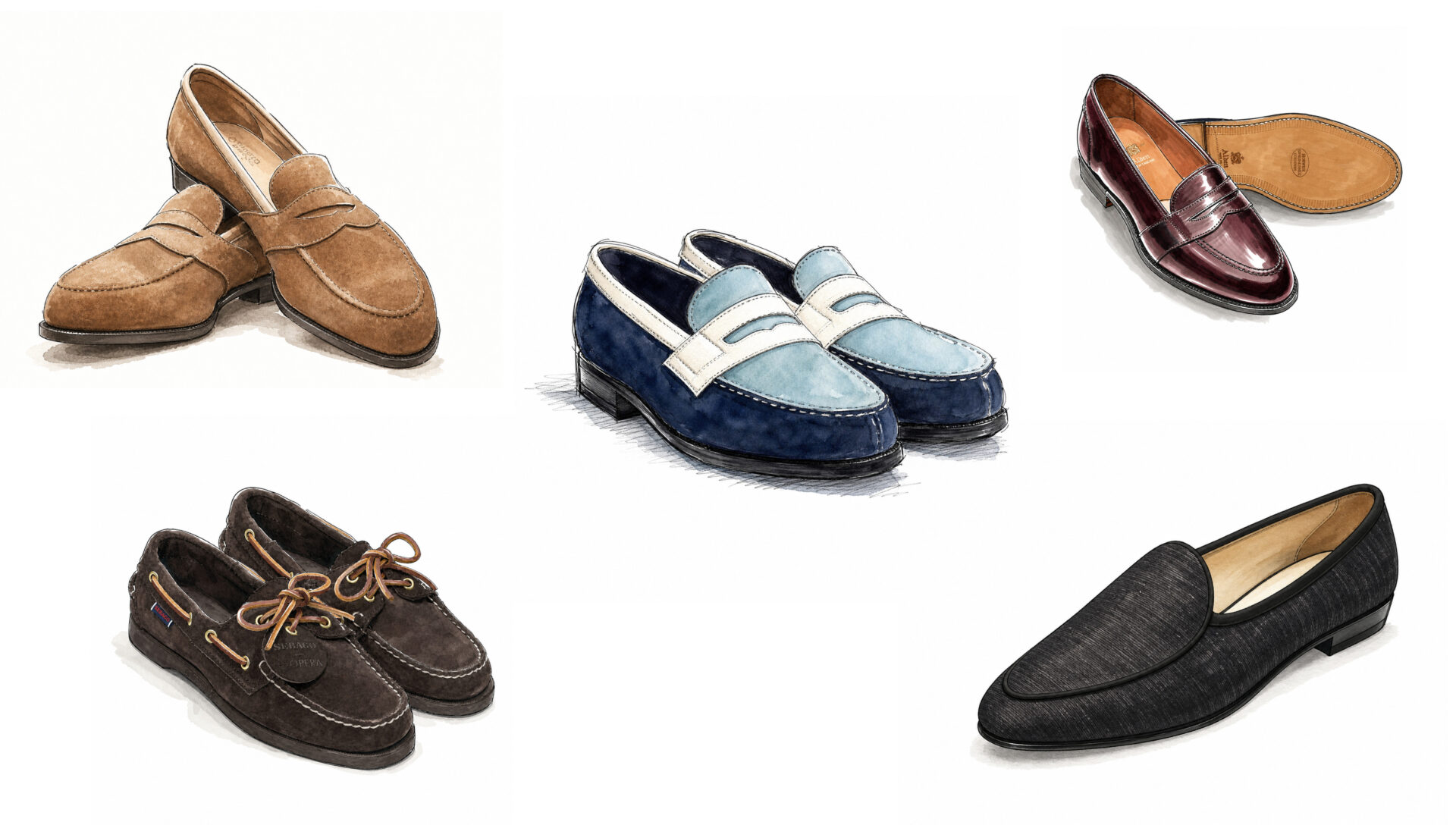
The loafer traces back to the moccasin worn by Native Americans, and to this day—from the century-old London bespoke house John Lobb to the quiet-luxury label The Row—new versions keep appearing. It has come a very long way, and yet there seems to be nowhere it can’t go.
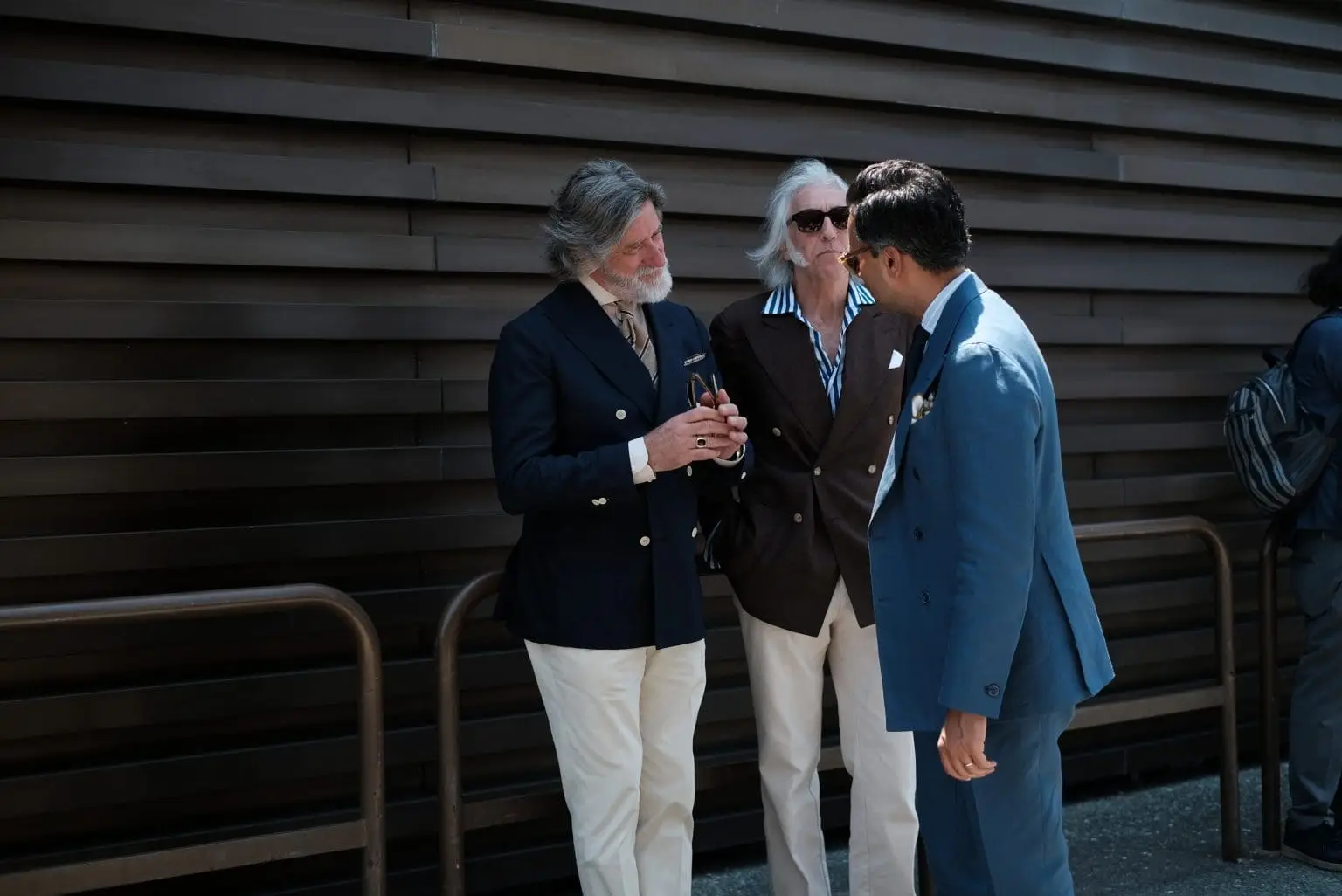
An American dad shuffles out for coffee in a pair; Jang Won-young wears them in the front row at Miu Miu. Come to think of it, the loafer goes further than that New Balance line about everyone from supermodels to dads wearing the same shoe. It doesn’t just cross gender, age, and class—it crosses the hardest threshold in the culture of dress: occasion. Unlike the oxford, it drags no set of social codes and status rules behind it. The loafer has none of that. It’s the first good shoe a style-conscious broke student can afford, and the power statement under the feet of the Wolf of Wall Street; British aristocrats wear it to dinner, and the owner of the pizzeria wears it standing by the oven all day. As traditional handmade dress shoes—heavy, too formal—get quietly filtered out by Silicon Valley money and the well-dressed of Paris and Shanghai, the loafer slips, soft and unannounced, into every corner of daily life.
That freedom is actually strange. Because for most of human history, a shoe was never free—it existed precisely to mark who you were and where you stood.
Two Roads for a Shoe
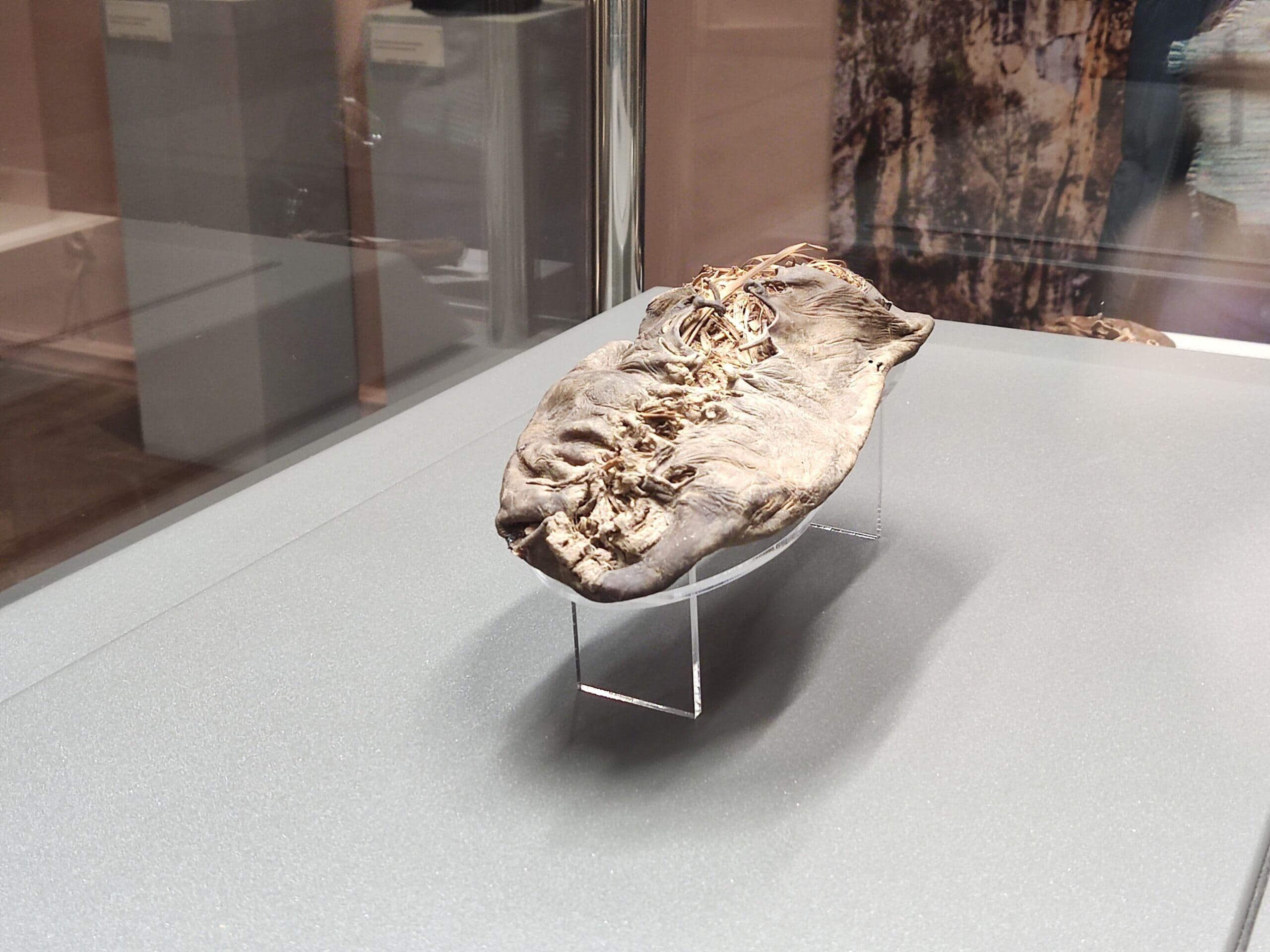
The oldest impulse to make a shoe came from the ground itself. A leather shoe unearthed in 2008 from the Areni-1 cave in Armenia has been carbon-dated to roughly 3500 BC—a thousand years older than the Great Pyramid of Giza, four hundred older than Stonehenge. Cut from a single piece of cowhide, shaped to the foot and stitched closed front and back, it was, in essence, one piece of leather wrapped around one foot. What’s striking is that this oldest known leather shoe is already, in its construction, remarkably close to the moccasin that came later.
From that piece of leather, the history of the shoe forked into two roads. One went upward, becoming a language of power. In ancient Egypt, a relief in the Cairo Museum shows the pharaoh Narmer followed by a sandal-bearer; the shoe was a symbol of sovereignty. That road ran all the way to its medieval extreme—the notorious poulaine, marked by its absurdly pointed toe, sometimes so long it had to be tied up to the knee to allow walking at all. It reached a point of such absurdity that medieval England actually passed laws limiting how long a shoe’s toe could be. A shoe that required legislation to govern how much space it was allowed to occupy—this was the disciplining of the shoe by occasion and status, pushed to its peak.