

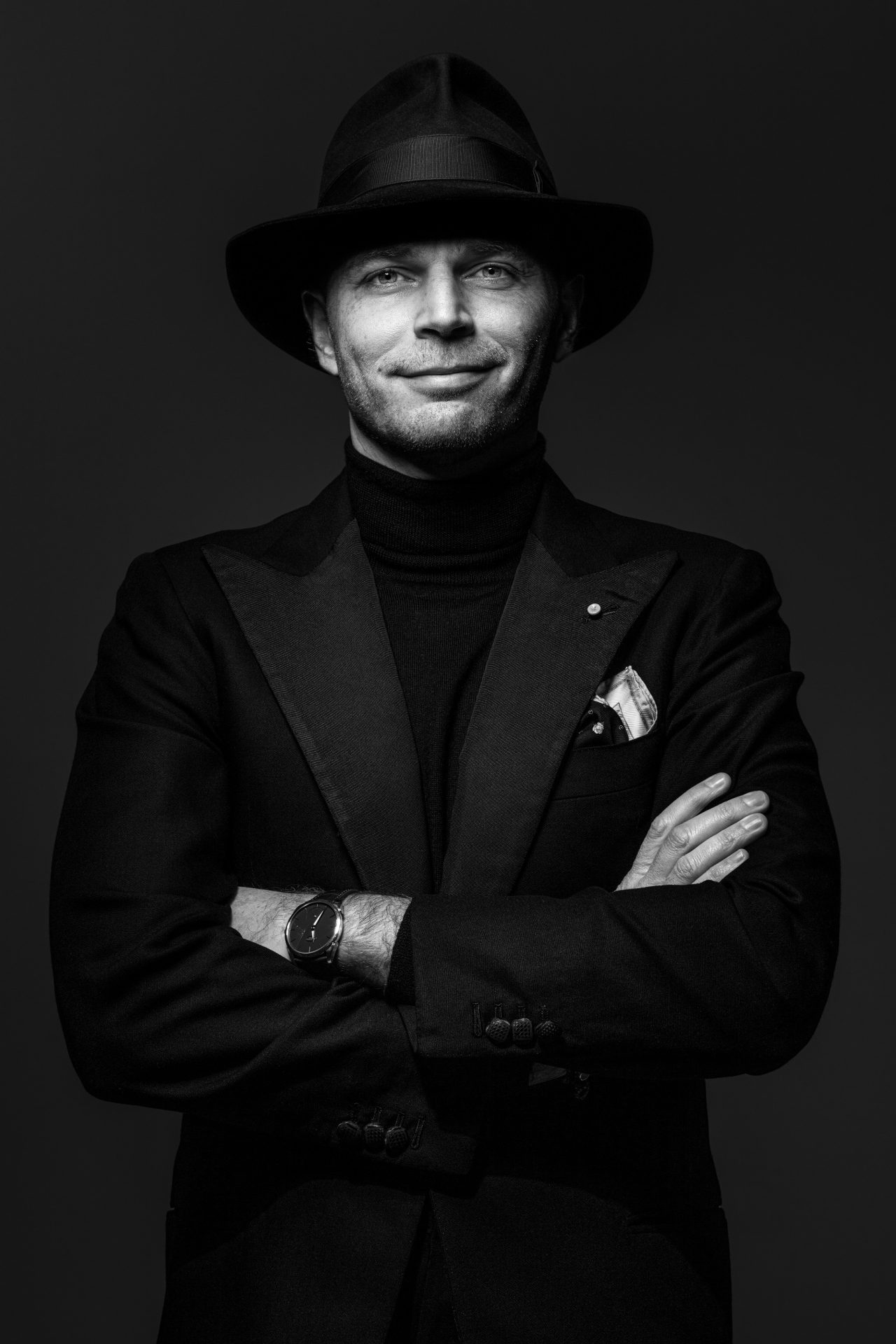
Luca Rubinacci on His Father's Legacy, the Lessons of Sergio Loro Piana, and the Future of Neapolitan Tailoring
Earlier this year, the world of bespoke menswear lost a pioneer. Mariano Rubinacci, the quiet visionary who carried Neapolitan tailoring to a global audience, passed away, leaving an indelible mark on the history of how men dress. For his son, Luca Rubinacci, the loss was deeply personal—he lost a father, a friend, and a mentor.
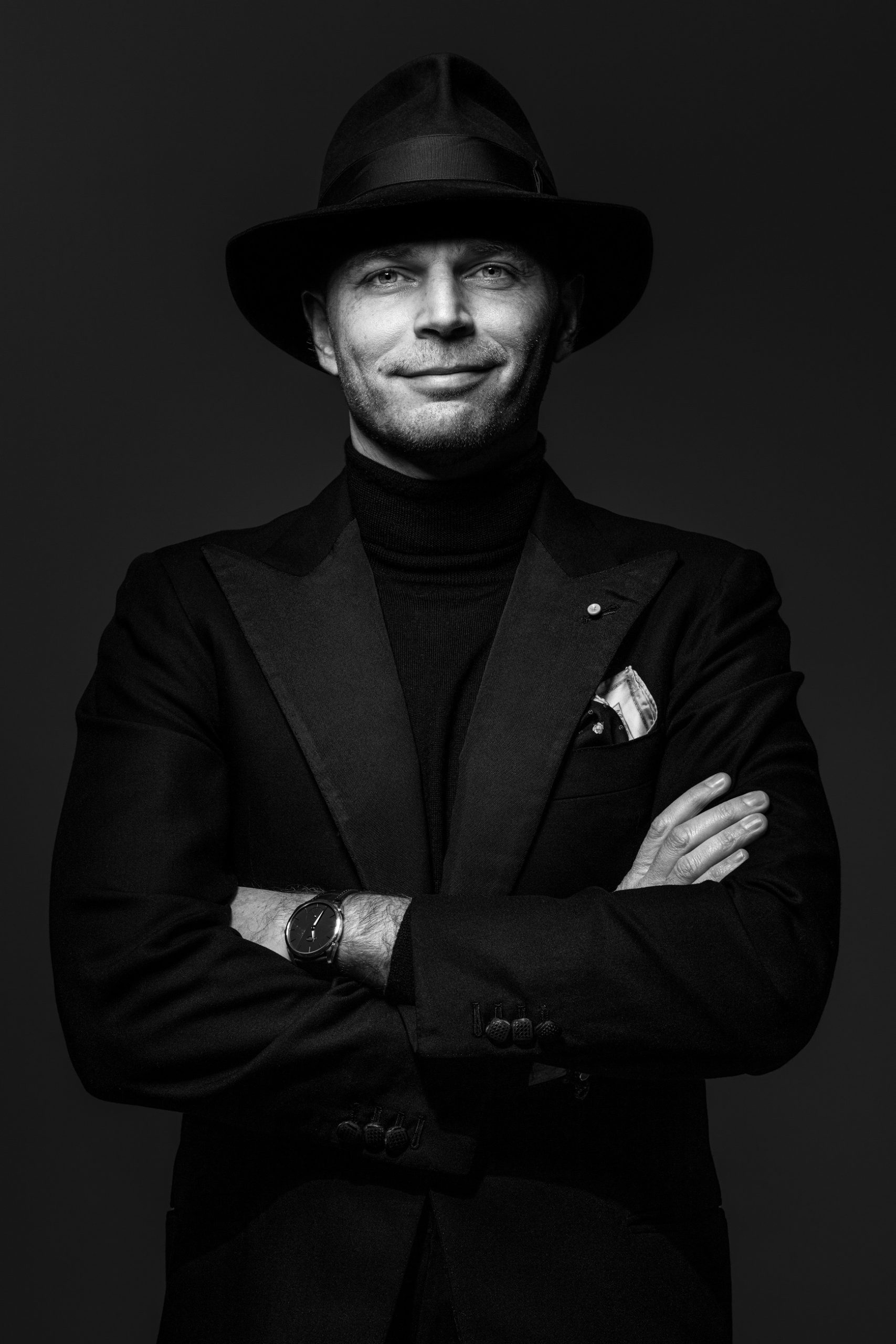
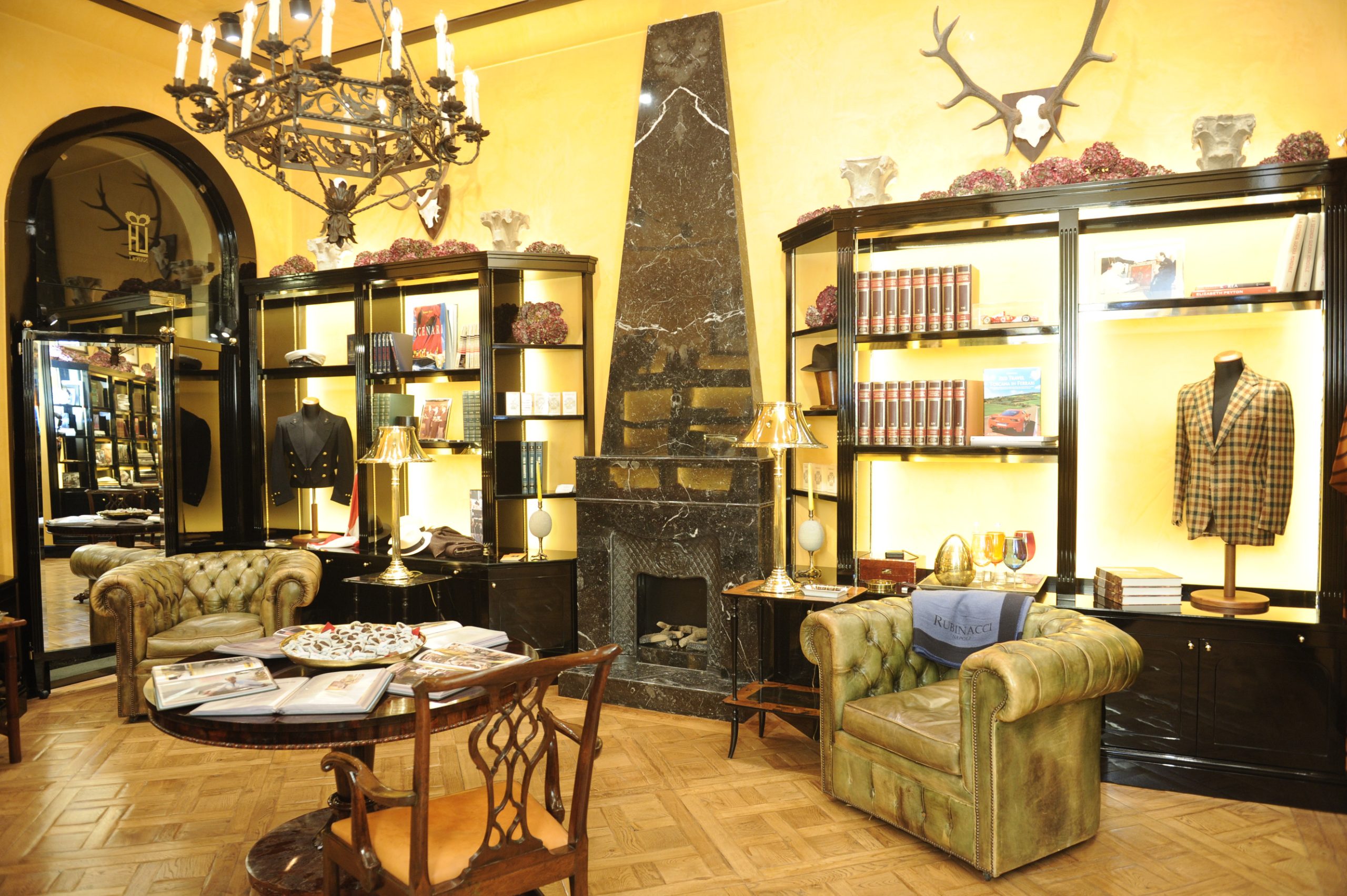
I had sat down with Luca, some time ago, at the sun-flooded Rubinacci headquarters in Milan. The conversation was meant to explore how a three-generation family house defines itself within the modern menswear landscape. Instead, it turned, almost without prompting, to the men who had shaped him: his father Mariano, his grandfather Gennaro, and the man he still calls his “Milanese mentor”—the late Sergio Loro Piana.
Revisiting that conversation now, Luca’s memories carry an irreplaceable historical weight. Through his words, the three generations of Rubinacci come into focus: his grandfather Gennaro’s aristocratic taste, his father Mariano’s quiet global ambition, and Luca’s own distinctly modern instinct for where the House stands today. This is no longer an interview about fabrics and lapels. It is an oral history—about seeing, about inheritance, and about a way of life that is slowly disappearing.
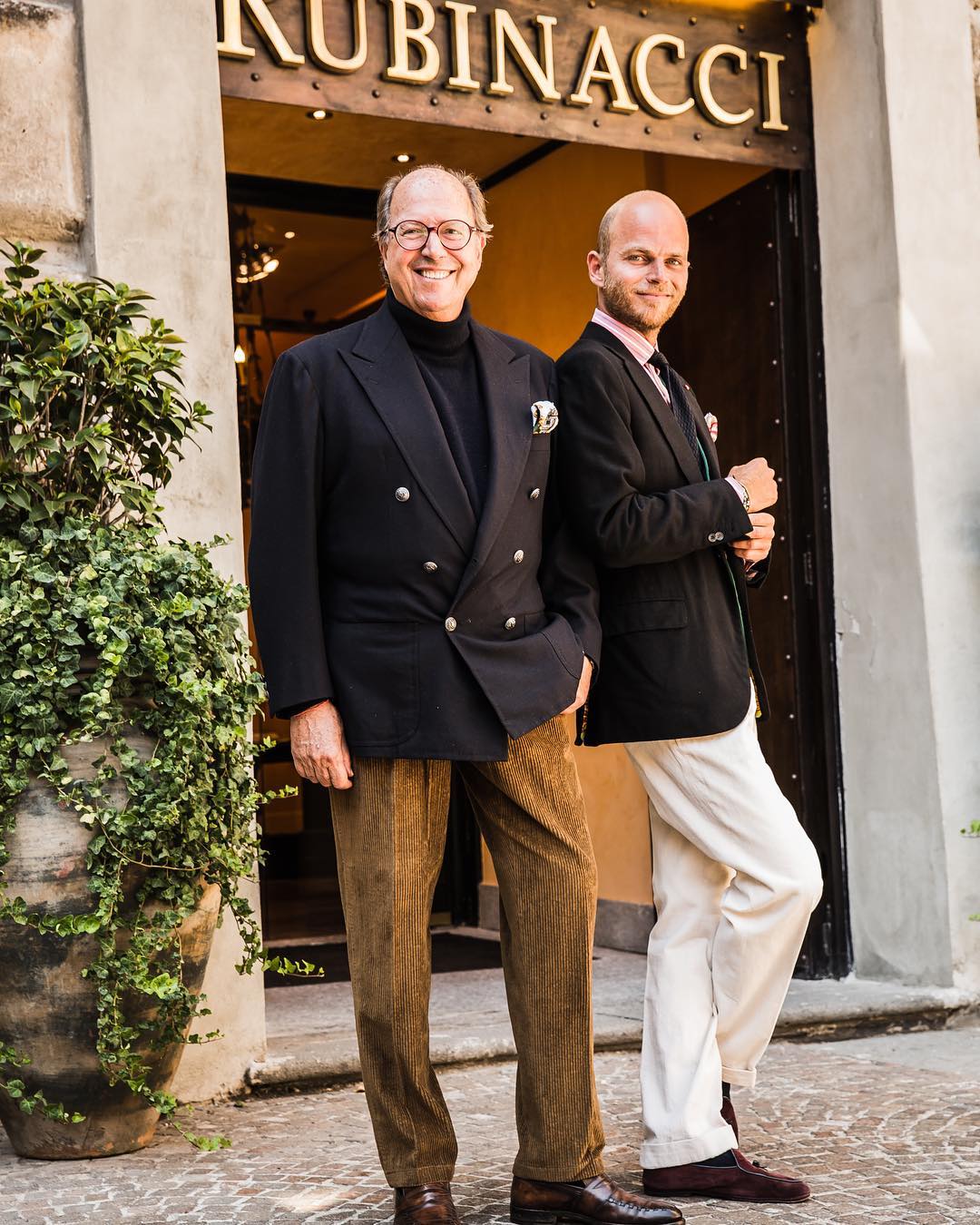
PART I: The Socialite, the Visionary, and the Expanding Empire
To understand the Rubinacci empire, you must first understand the men who built it. The story begins in 1932, in the Chiaia district of Naples—and the founder wasn’t a tailor.
“My grandfather was the first one to deconstruct a jacket for his clientele,” Luca recalls.
Born into a wealthy silk-merchant family, Gennaro Rubinacci was known in Neapolitan society as “Bebè”—a name reserved for the cherished, impeccably dressed sons of privilege. He was an art collector and a fixture of aristocratic life. Even the King of Savoy, then reigning over the Two Sicilies, relied on his eye, asking him to advise on the clothes he should wear.
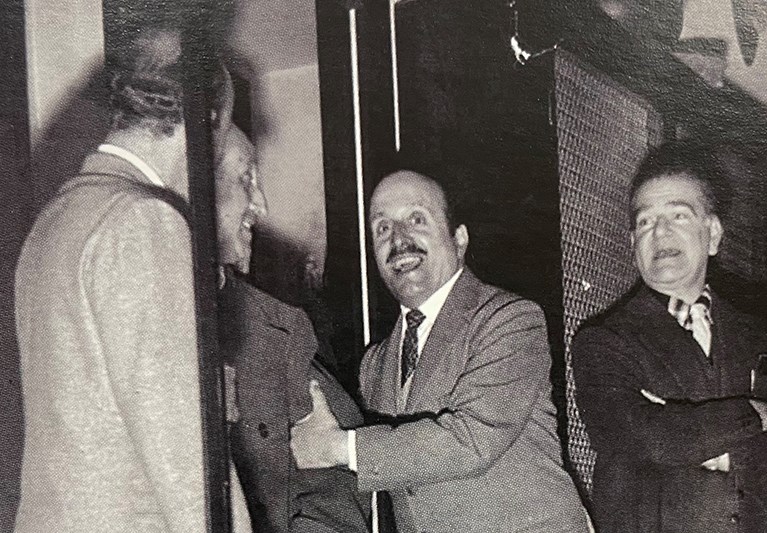
“These noble clients didn’t need a product to go to business. They were wandering for something more relaxed,” Luca explains. “That’s why he started to deconstruct the jacket, taking off the padding, putting on the spalla camicia, the barchetta pocket—without knowing it, he was pioneering what we now call Neapolitan tailoring.”
Bebè provided the aristocratic vision; the needle and thread were left to masters like Vincenzo Attolini. As Luca puts it: “The tailors at the time were like painters painting the same painting, they had no vision of changing anything. It was my grandfather—someone who truly knew the context in which his clients were living—who pushed the change.”
If Gennaro established the taste, his son Mariano was the visionary who carried a local atelier to the world.
“He was the first one to take Neapolitan tailoring outside of Naples,” Luca explains. “Back then, tailors were like horses with blinders—they only looked at their own neighborhood. There were more than 15,000 tailors in Naples alone. In Milan, only about 2,000. My father was the first to move. In 1987, he opened his first atelier in Milan. In 2005, we arrived in London.”
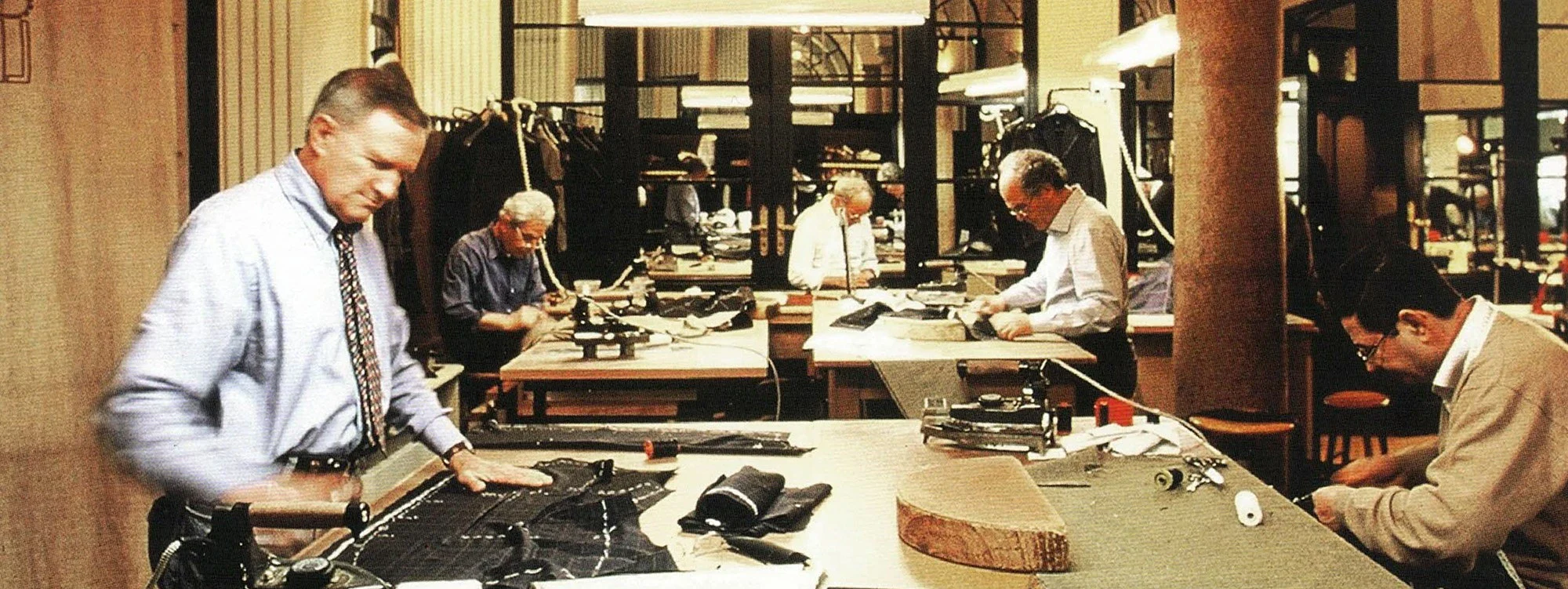
For Luca, that atelier was the playground of his childhood.
“When I was seven, the tailors would give me little pieces of fabric and let me stitch them onto my own trousers. I would go to school in these patchwork trousers. I still keep them in my archive.”
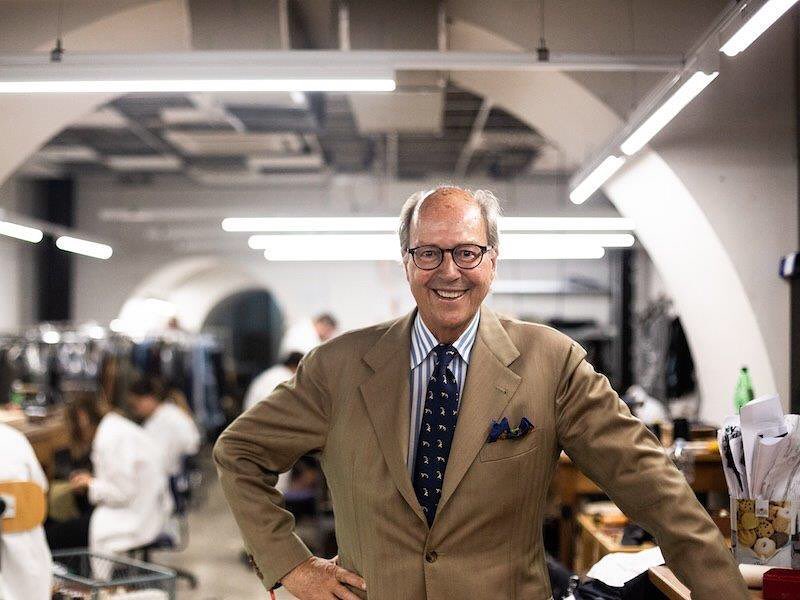
PART II: Sergio Loro Piana's Wednesday Night Lessons
You don't know your style until you enrich yourself with the eye of details.
Sergio Loro Piana
In 2000, after an apprenticeship on London’s Savile Row, the twenty-year-old Luca came to Milan at his father’s suggestion. Mariano believed his young heir needed a more international eye. It was in Milan that Luca met his second mentor—the late Sergio Loro Piana. The Loro Piana family had long been Rubinacci bespoke clients.
For nearly a decade, every Wednesday night at 7 p.m., Sergio trained Luca in the art of seeing.
“He taught me how to build my own style. He said: you don’t know your style until you enrich yourself with the eye of details. He asked me to come back every Wednesday and tell him what I had seen in the street.”
When Luca once described a man in a handsome blue pinstripe suit, Sergio interrupted him.
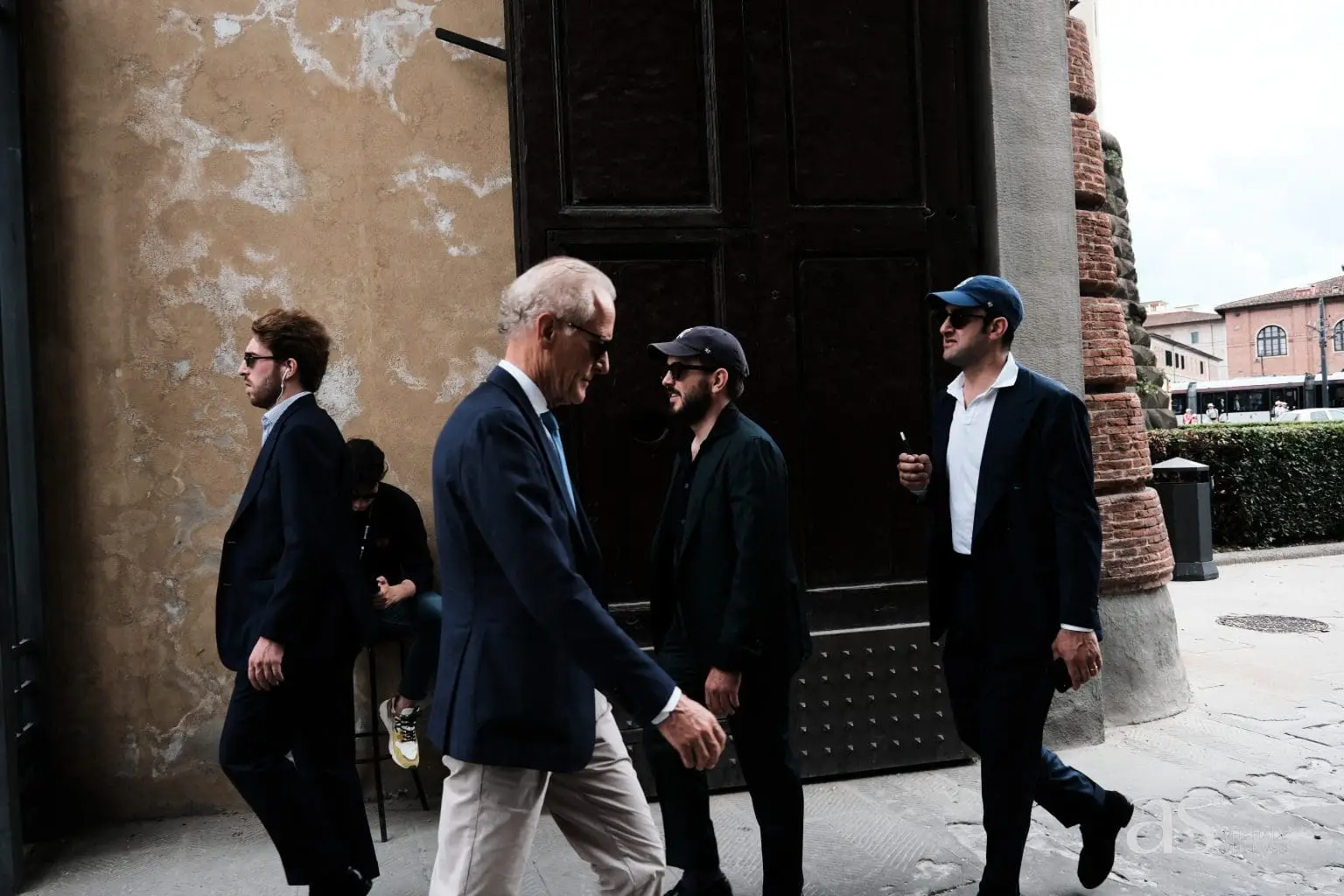
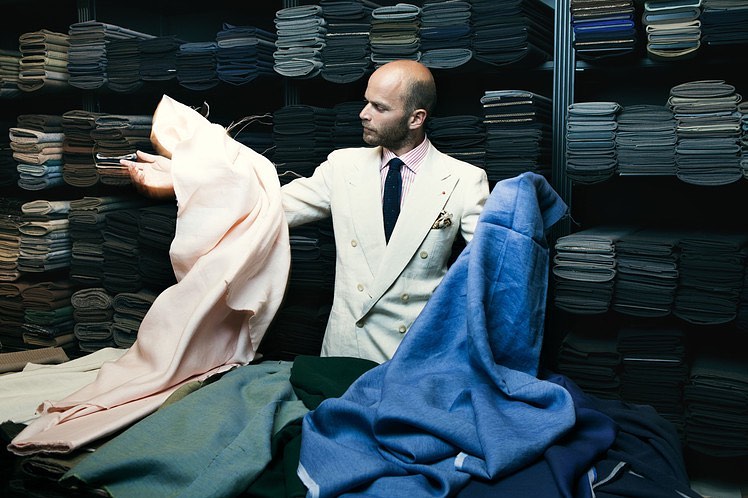
“He said, I don’t want to hear that. I want to know the smallest details. When you look at people, you look at the entire look. But to build your own style, you have to look at the details. He would grill me: how wide were the trousers, what were the buttons, what was the proportion of the lapel. There were no phones to take pictures back then—I had to catch everything with my memory, with my eyes. He made me understand: you can copy an entire outfit, but to build your own style, you have to take the details of that outfit and make them your own.”
“You have to train your mind like a football player who trains eight hours a day,” Luca says. “I feel like an ice cream maker. I cannot make only vanilla and be the best ice cream maker in the world. I have to make all the flavors, all the flavors in the best way.”
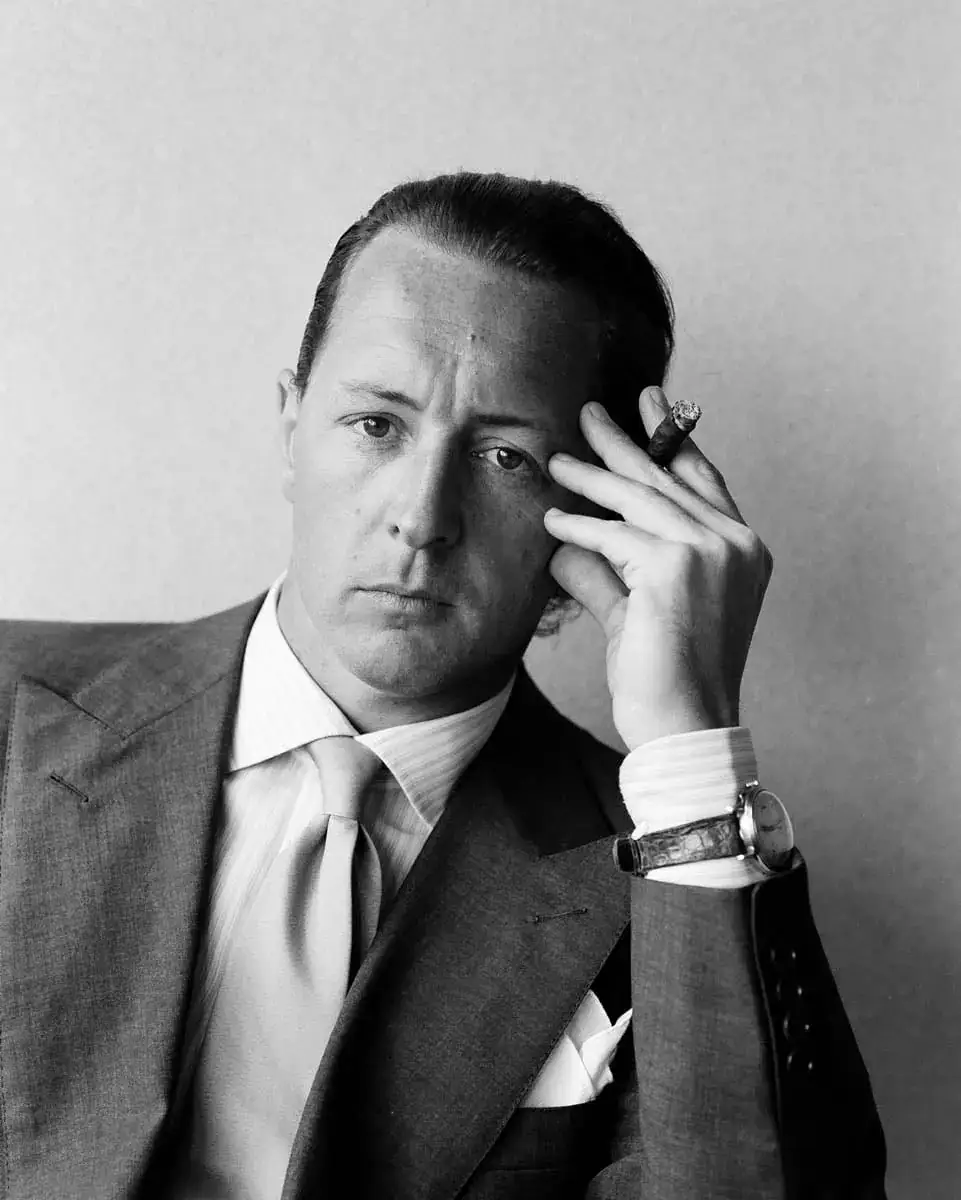
While Sergio was sharpening Luca’s eye, Mariano was shaping his character through a quieter trust.
“My father never told me what was right or wrong. He just spoke with me. The greatest lesson he ever gave me was to keep an open mind. In a world where everything seems already invented, you have to be on a boat—you have to see the wind coming, and try to catch it before anyone else does.”
The father refused to give answers. The son, in turn, learned to read the wind.
So when Luca later brought the house into ready-to-wear, into Instagram, into a clientele in its thirties—no one accused him of betrayal. Mariano had never burdened his son with the weight of orthodoxy. What he handed down, instead, was judgment.
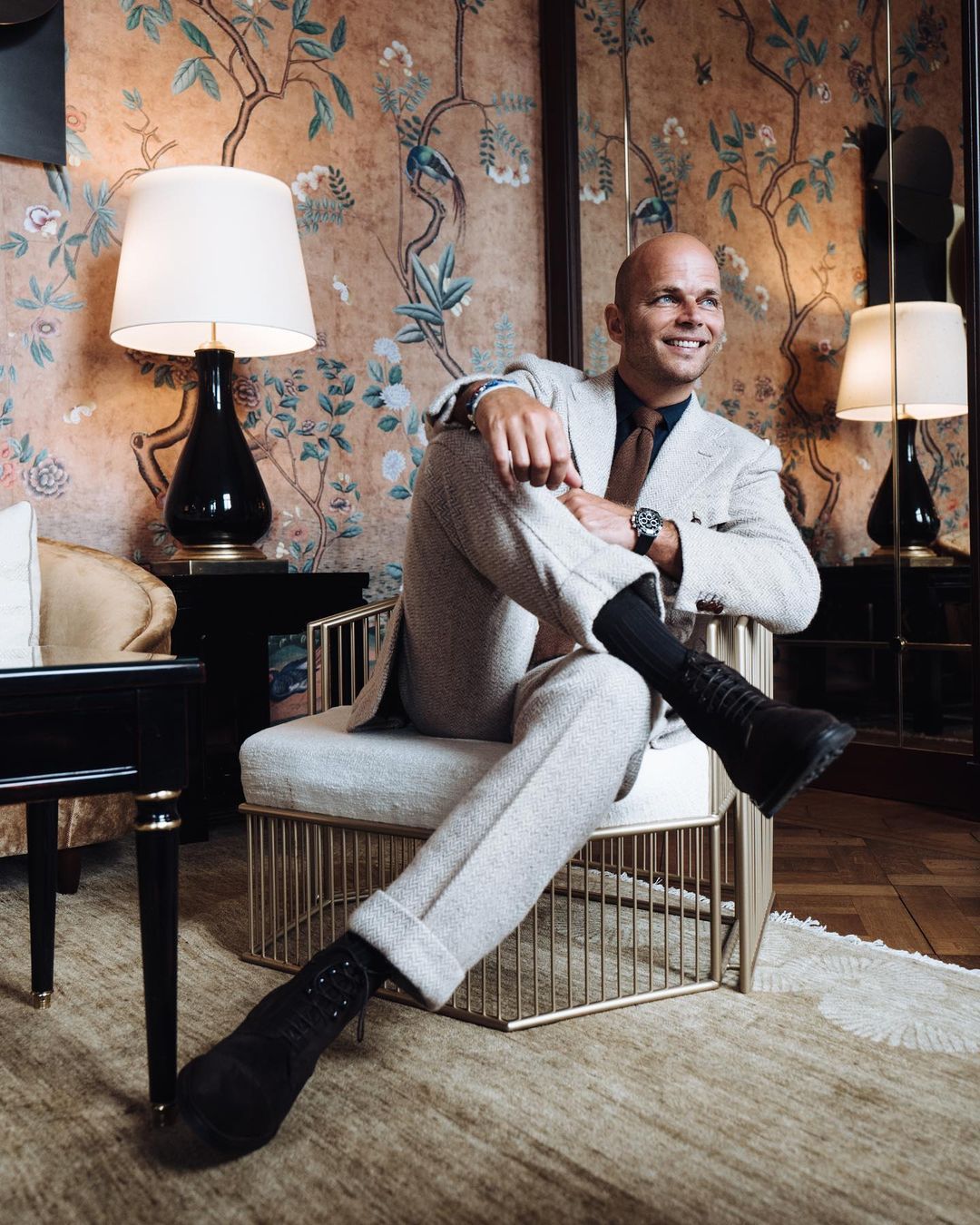
PART III: The 3.0 Generation, and a Deeper Idea of Sustainability
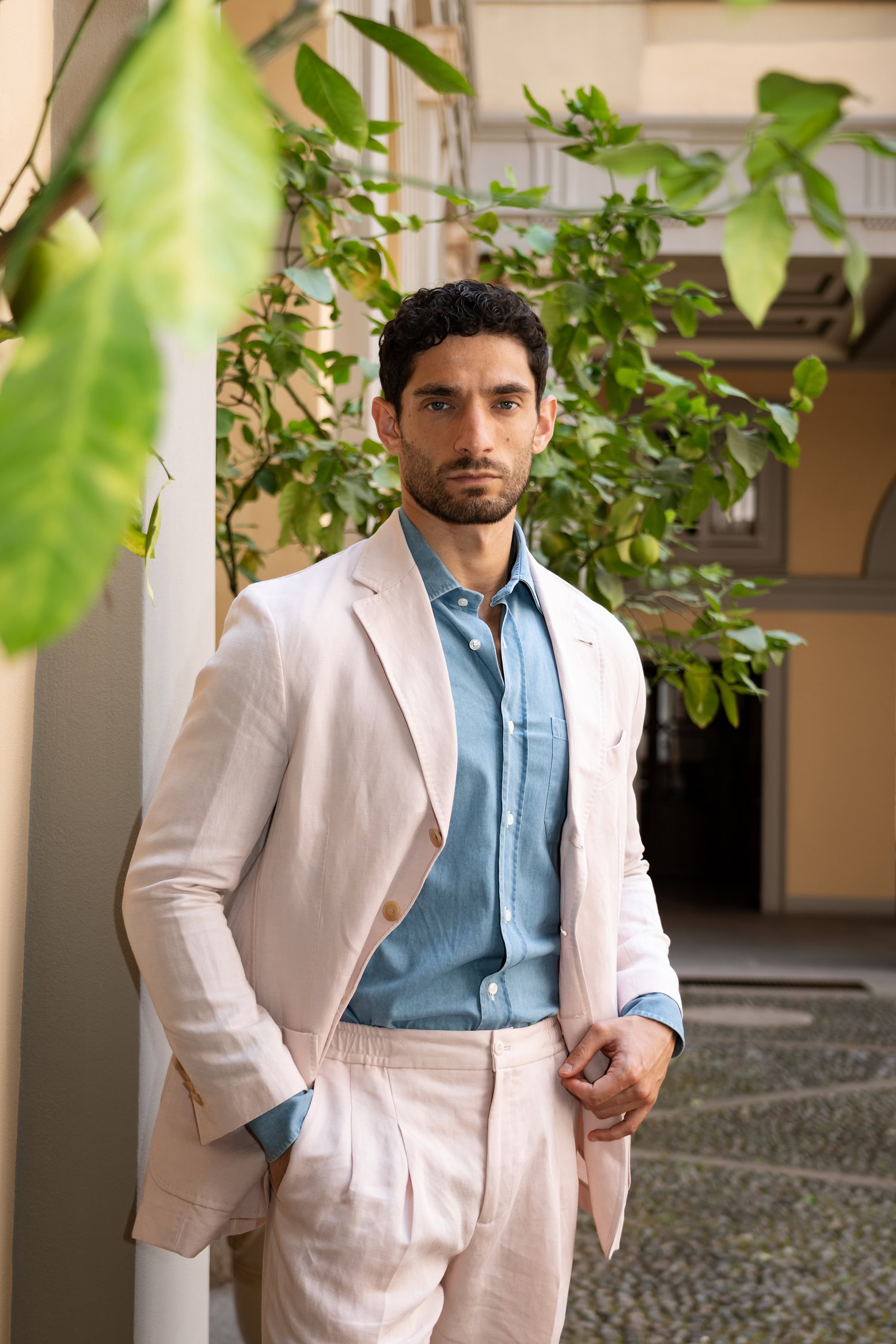
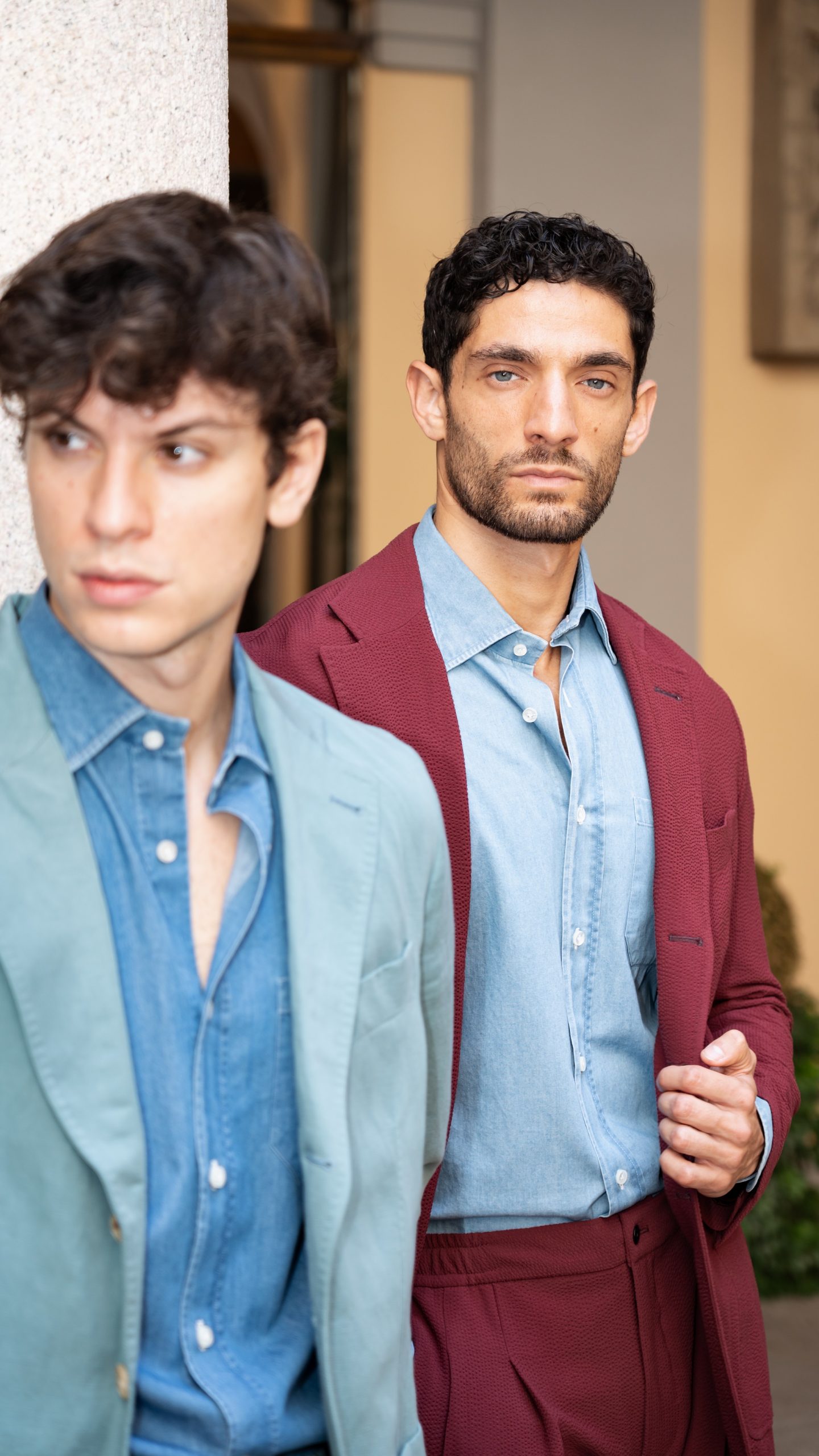
Carrying his grandfather’s taste, his father’s ambition, and Sergio Loro Piana’s obsession with detail, Luca has shaped his own clearly defined voice. As what he calls the 3.0 generation of Rubinacci, he has brought the philosophy of bespoke into ready-to-wear, lowering the average age of the House’s clientele from 60 to 35.
“Our mission is to dress them casual, cool, and at the same time gentle. I say gentle and not elegant, because elegance depends on the context you live in. A surfer in his shorts, riding a wave, can be elegant. A swimmer in his Speedo can be elegant. For us, elegance is never just a jacket and a tie.”
Beneath this very modern stance lies Luca’s firm defense of what Neapolitan tailoring actually means. For him, it is not a fashion statement—it is a way of living sustainably.
“Many Neapolitan tailoring houses like to show off their beautiful spalla camicia, their wide lapels. That is fashion. What we want is a product that stays in a man’s wardrobe for more than ten years.”
“Sustainability starts from the client, not from the product made of recycled paper. I don’t care about the recycled paper fabric. I care about giving the client something that stays in his wardrobe for more than ten years. That is sustainable.”
It is an almost exact echo of something Sergio Loro Piana himself used to say: Our customers don’t want to look fashionable. They want to be stylish, with the best quality materials.
Those nearly ten years of Wednesday nights at seven o’clock were not spent in vain.
At the close of our conversation, Luca offered what may be the most complete summation of what three generations of Rubinacci have tried to build:
“It’s all about the knowledge and the passion you can build up with your wardrobe. You come inside asking for a suit, and you go out with a passion.“



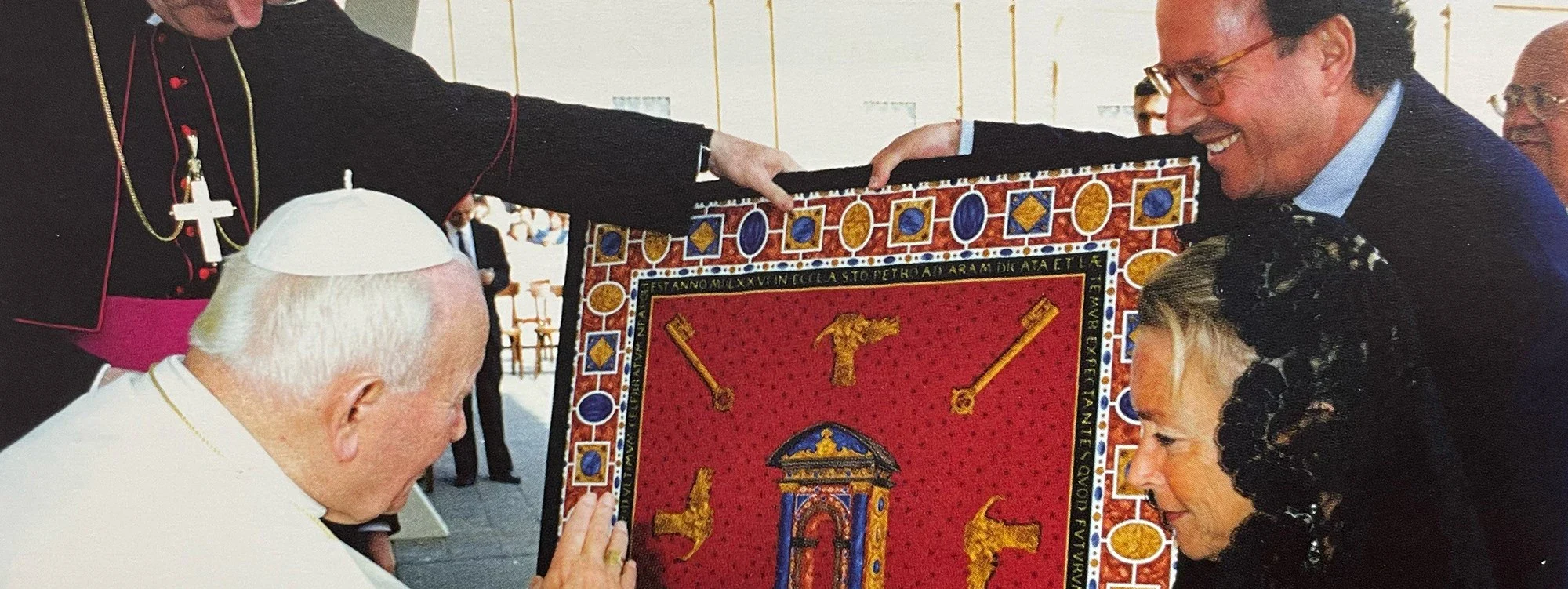
His experience with Sergio Loro Piana is priceless.