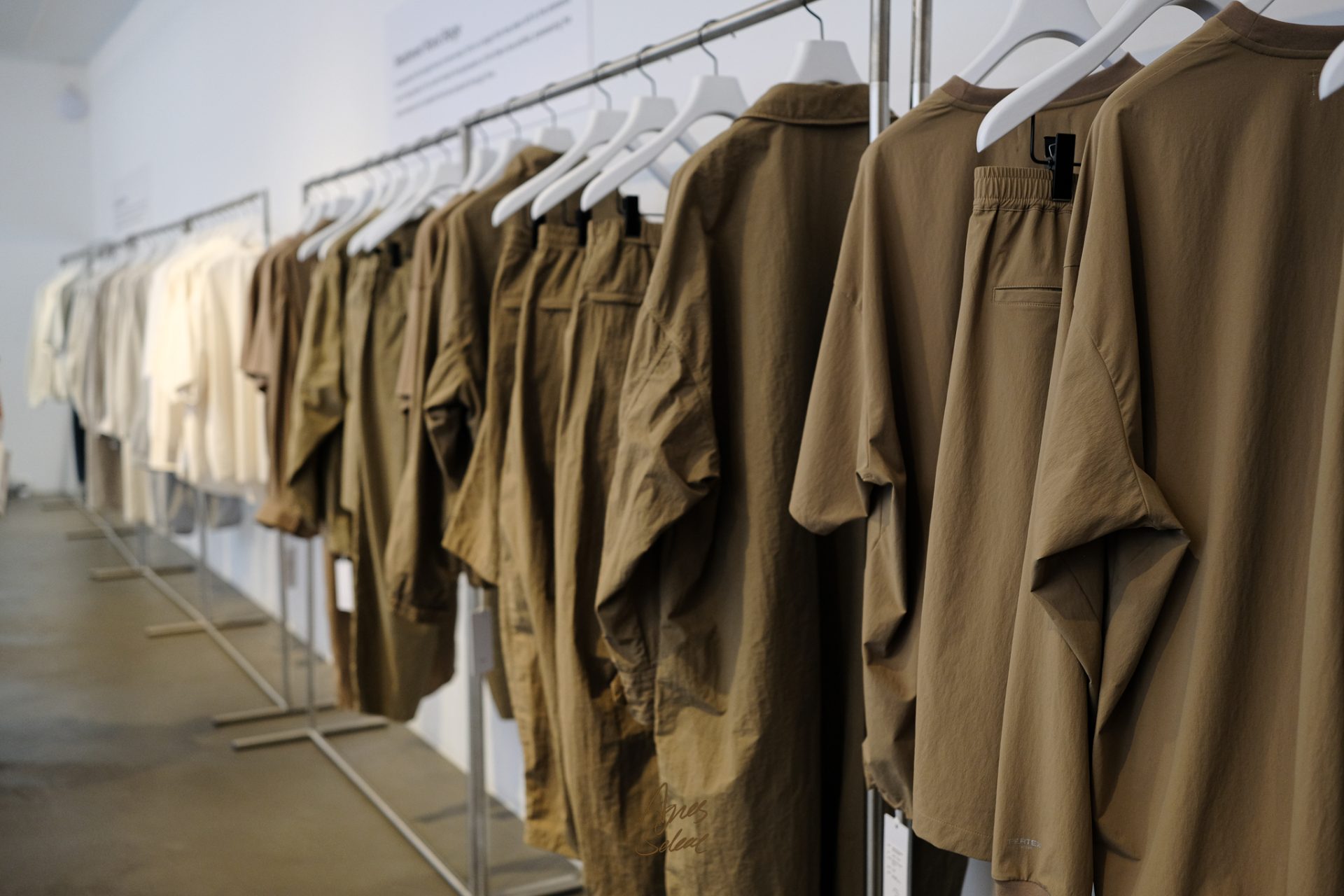

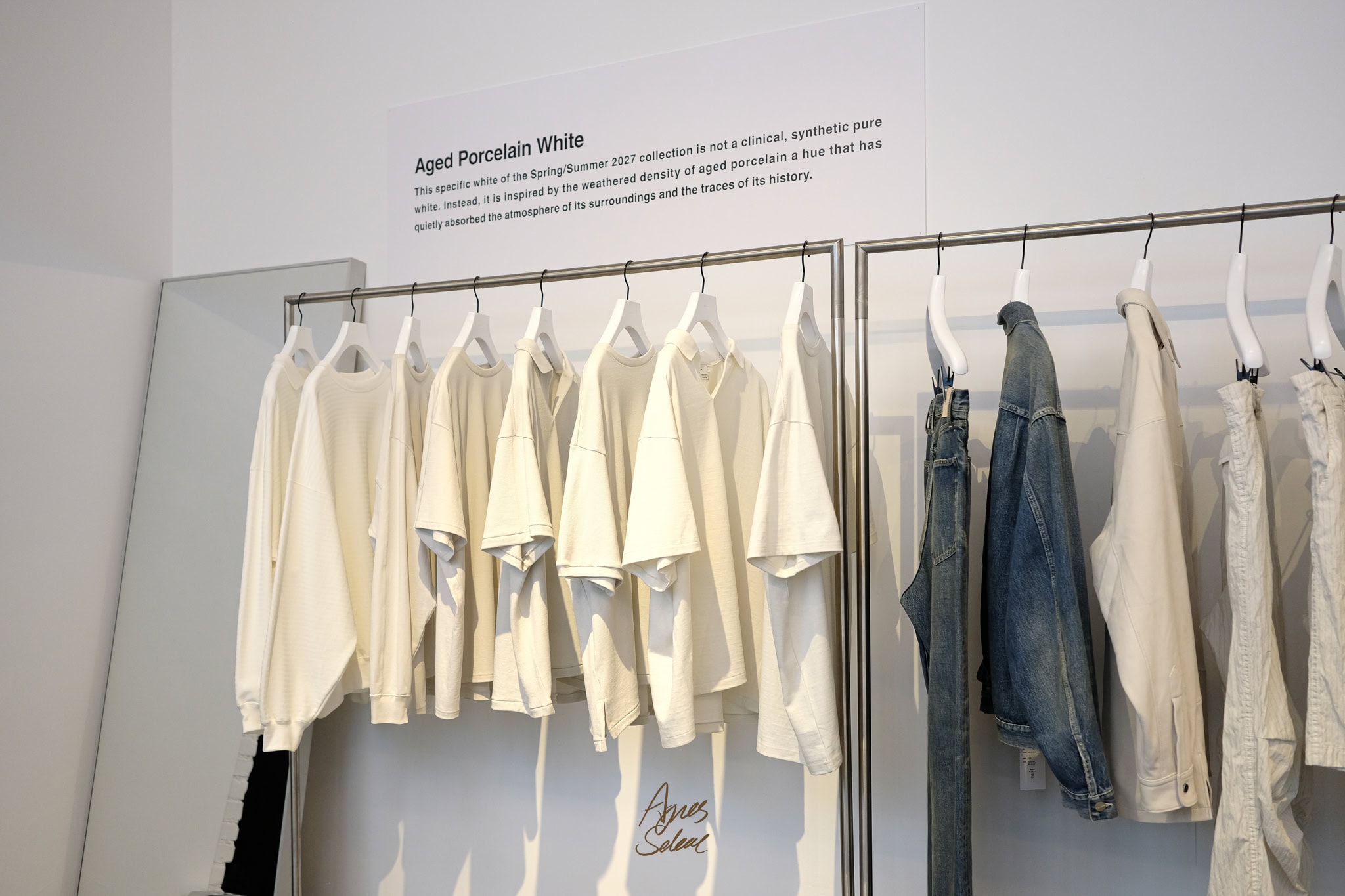
Graphpaper has set up its SS2027 showroom and a pop-up store in the Marais. The Tokyo label is the work of Takayuki Minami, one of the defining figures behind a generation of Japanese menswear retail.
Minami has spent close to thirty years in Tokyo, and he builds systems. In 1996, at twenty, he joined H.P.FRANCE and worked on the launch of CANNABIS and other early-canon select shops, on the buying and store-planning side. In 2008 he set up alpha on his own, and as external director shaped 1LDK — rethinking the everyday wardrobe for the city, with an unsentimental eye.
When alpha was incorporated, Minami was at once a brand director, a shopkeeper, and a PR principal. Retail, for him, is something you curate. Hence FreshService in 2013, a pop-up staged as a fictional shipping company; hence Hibiya Central Market later, where food, clothing and barbering share one floor. Clothes never sit on their own in his view — they are one piece of a larger lifestyle picture. He has said he has no interest in fashion trends; he looks at a garment the way he looks at a vessel or a chair, straight at the object, and then at the gap where something ought to exist and doesn’t.
From a Select Shop to a Wardrobe
The Graphpaper concept store opened in Aoyama in 2015 and is where this thinking sits whole. The space reads as a gallery: symmetrical, minimal, hangers set into the wall, so each piece is looked at the way you look at art. The clothing line followed a year later. It is not the store’s house line. It is its own brand, with a clean brief — a well-made wardrobe for adults that doesn’t date.
Minami’s phrase for it is “the uncommon ordinary.” After almost ten years, Graphpaper is no longer a label in Japan; it is an ecosystem. What lands in Paris with SS2027, then, is not a season. It is a curatorial method, tested over a decade in Tokyo.
What Time Leaves Behind
The collection is titled What Time Leaves Behind.
There is a word in Japanese, keinen rekka (経年劣化) — the gradual wearing-down of things. Graphpaper inverts it: keinen bika (経年美化), things growing more beautiful with use.
Under that frame, garments step back from being finished objects. They become invitations. The cuts are deliberately loose, leaving yohaku (余白), the Japanese sense of blank space, between body and cloth. This is not oversize for its own sake. It is room reserved for the wearer’s habits and the way they move — the part of the design time is meant to finish.